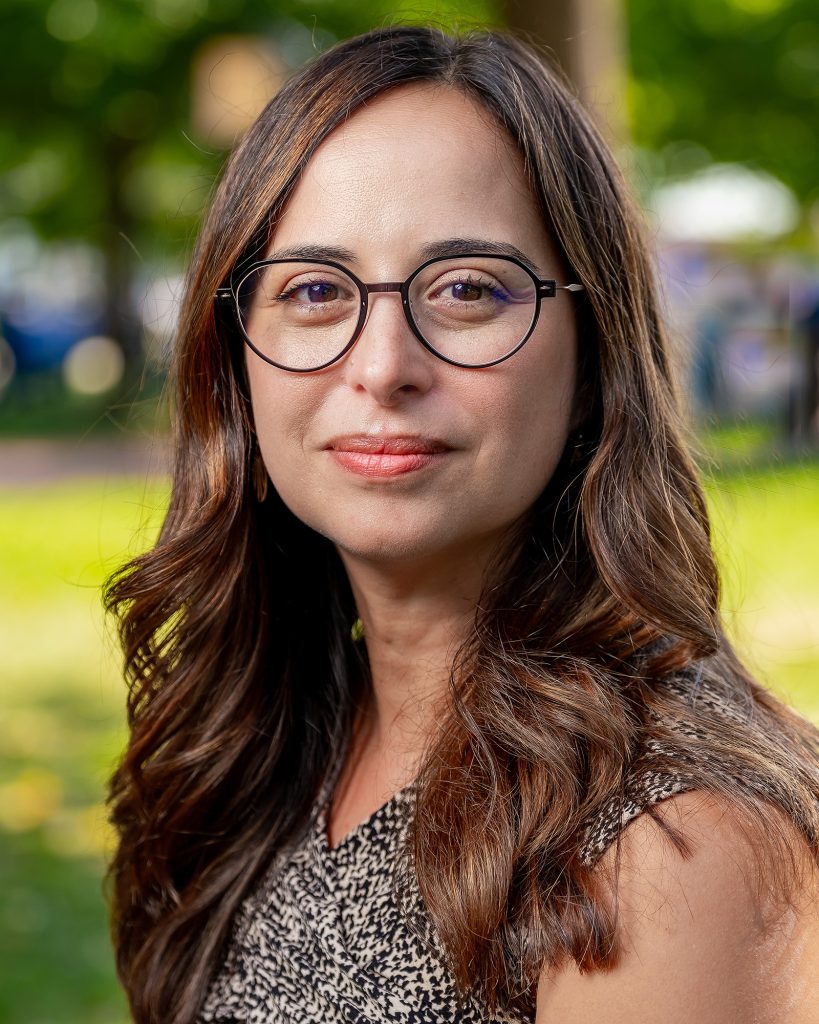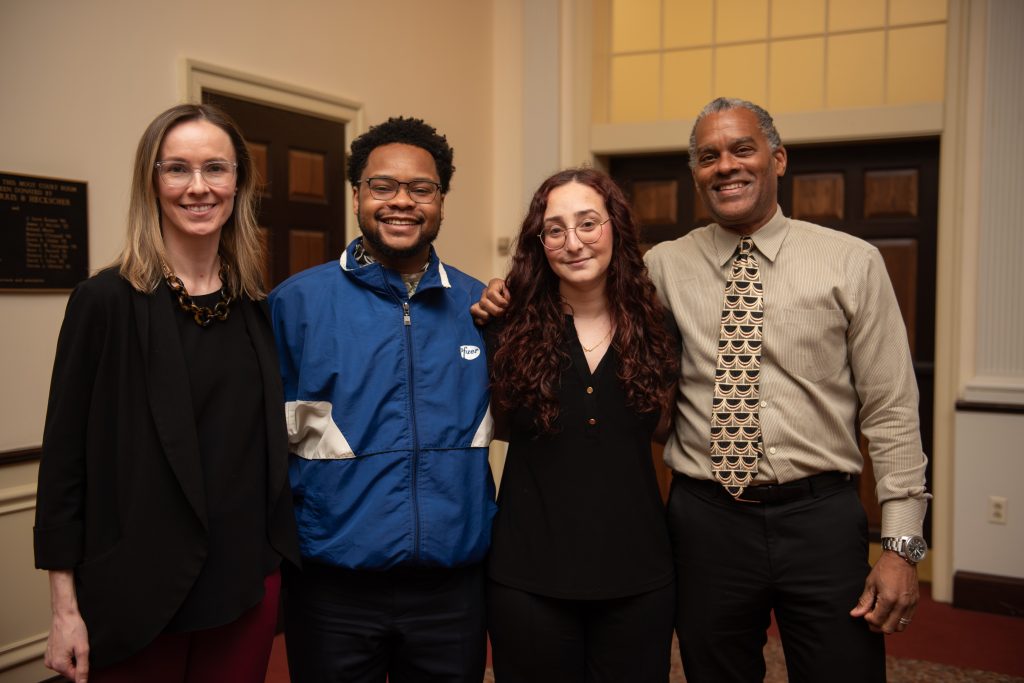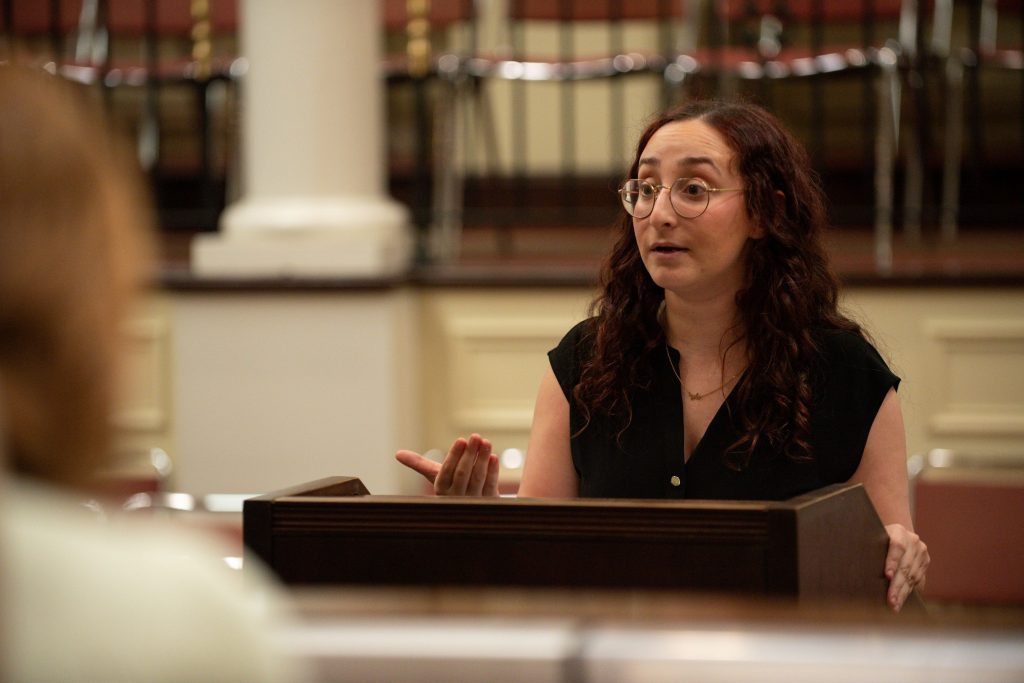
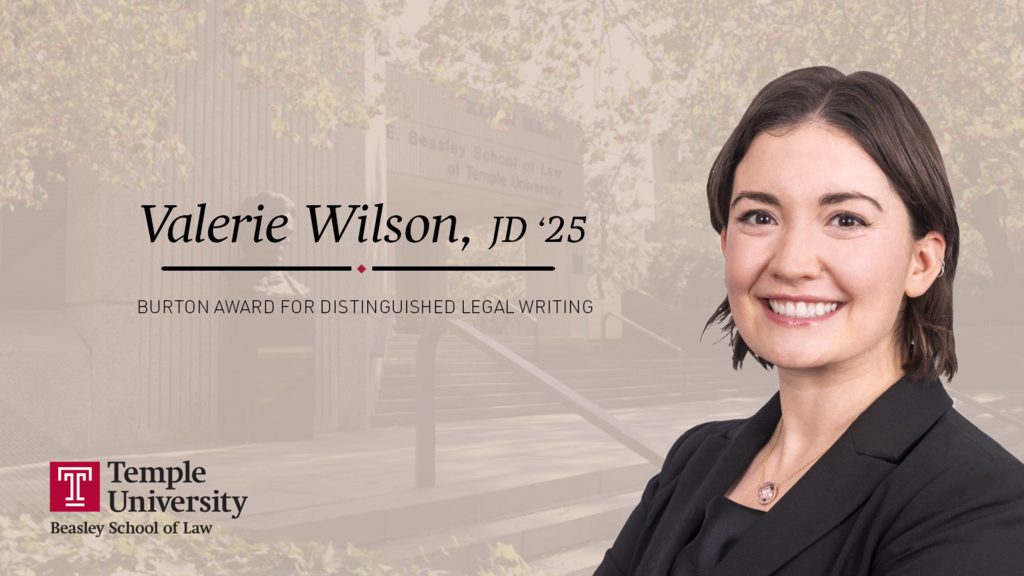
Temple University Beasley School of Law graduate Valerie Wilson (JD ‘25) has been named a recipient of the prestigious Burton Award for Distinguished Legal Writing, a national honor recognizing excellence in legal scholarship.  

The Right of Publicity in the Digital Age

Wilson’s award-winning article, “New Impressions: Defining and Designing a Right of Publicity for the Digital Commercial Landscape,” examines how the right of publicity—traditionally associated with celebrity identity and endorsement—has evolved in the digital age, where ordinary individuals can generate measurable economic value through their online presence.

“My article is about the application of the right of publicity in digital spaces, and how the various theoretical conceptions of the tort of the right of publicity have led to vastly different outcomes for digital space litigants,” Wilson explained. “I argue that any federally codified right of publicity should be based on the value of the appropriated persona in the eyes of the perceiving audience, articulated as ‘associational value’ by some scholars.” 

Her work proposes a shift away from celebrity status as the central inquiry in right of publicity claims, instead focusing on the economic value of a persona as understood by audiences. This approach, she argues, would better reflect modern advertising models and bring greater consistency to how courts apply immunity under Section 230 of the Communications Decency Act in cases arising from online activity.

“The right of publicity has a body of case law that mostly deals with celebrities, so it was traditionally considered a ‘celebrity’ tort,” Wilson said. “But I think the growth of the Internet has rendered everyone a ‘celebrity’ in some ways, because social media platforms, in particular, make their money by leveraging the connections of non-famous, average people.”  

Professor Claudia De Palma, who nominated Wilson for the award, praised the originality and depth of her scholarship.  

“Valerie’s article stood out as a creative and ambitious analysis of intersecting legal doctrines,” De Palma said. “Her work exemplifies the kind of innovative, complex thinking that advances the law through scholarship, and I’m thrilled to see her efforts recognized.”  

From Advertising Industry to Legal Scholarship

Wilson’s interest in the topic grew out of both personal experience and academic curiosity. Her father worked in television news in Philadelphia, which introduced her to the advertising industry. Then, prior to law school, she worked at a media sales agency during a period when advertising valuation was shifting from traditional ratings-based metrics to impression-based digital tracking. 

That interest deepened in law school, where through coursework and research she explored Section 230 and online harms. A pivotal moment came when she encountered a case involving a Philadelphia news anchor that reached the United States Court of Appeals for the Third Circuit.  

“When I read the opinion, I found there were some conclusions in the opinion that did not fit with what I had studied and researched, so I thought I could contribute something to the scholarship around that case,” Wilson said.  

Through her research, Wilson observed how dramatically the right of publicity has expanded beyond its celebrity roots, and sees this area of law continuing to evolve alongside emerging technologies. 

“We can be well known in our communities even if we’re not famous, and the Internet has made it possible to financially leverage that in a completely new way,” she said. “And I think that this will only continue to evolve with the development of AI and other technological advancements, which is really interesting.”

Bringing Scholarship Into Practice

Receiving the Burton Award so early in her career, she said, is especially meaningful.  

“At this early state in my legal career, it means a lot for my scholarship to be recognized with this award,” Wilson said. “Being a new attorney means learning new things every day, and developing a practice has a steep growth curve as a young lawyer.”  

Wilson is an associate in the Corporate group at Duane Morris LLP, where she says her scholarship continues to inform her approach to practice. 

“This experience has shaped my practice as a corporate transactional attorney in many ways,” she said. “I now think about how different aspects of a business add value in more creative ways, because that concept of ‘value’ is at the core of my article.” 

She added that the writing process itself reinforced foundational skills she now uses daily: “The writing process also taught me how to read carefully, write deliberately, adhere to deadlines, and be meticulous in my proofreading and editing, all of which are important skills that I use every day as an associate attorney.”  

A Tradition of Distinguished Legal Writing at Temple Law

The Burton Awards for Legal Achievement—established in 1999 and held in association with the Library of Congress—are widely regarded among the most prestigious honors in the legal profession, recognizing excellence in legal writing, reform, public service, and innovation. The Distinguished Legal Writing Award specifically honors a select group of authors each year whose work demonstrates exceptional clarity, insight, and mastery of complex legal issues. Selected by leading scholars and practitioners, the award highlights writing that advances understanding of the law and reflects the highest standards of the profession.  

With this recognition, Wilson becomes the sixth graduate of Temple University Beasley School of Law to receive the Burton Award for Distinguished Legal Writing, joining a distinguished group of alumni honored for excellence in legal scholarship. Previous Temple Law recipients include Jonathan Fedors (2024), Puja Upadhyay (2023), Laura A. Adams (2013), Michael Dillon (2012), and Nathaniel C. Guest (2010), underscoring the Law School’s longstanding strength in producing impactful legal writers. 

Read Valerie’s full article in the Temple Law Review here: https://www.templelawreview.org/comment/new-impressions-defining-and-designing-a-right-of-publicity-for-the-digital-commercial-landscape/
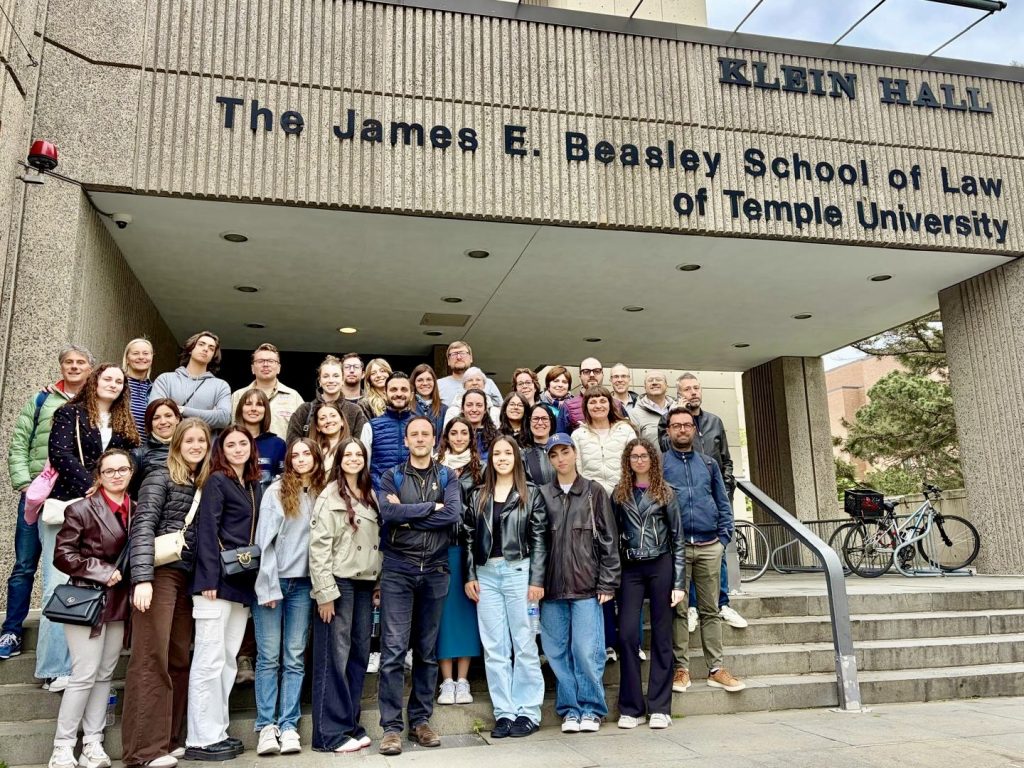
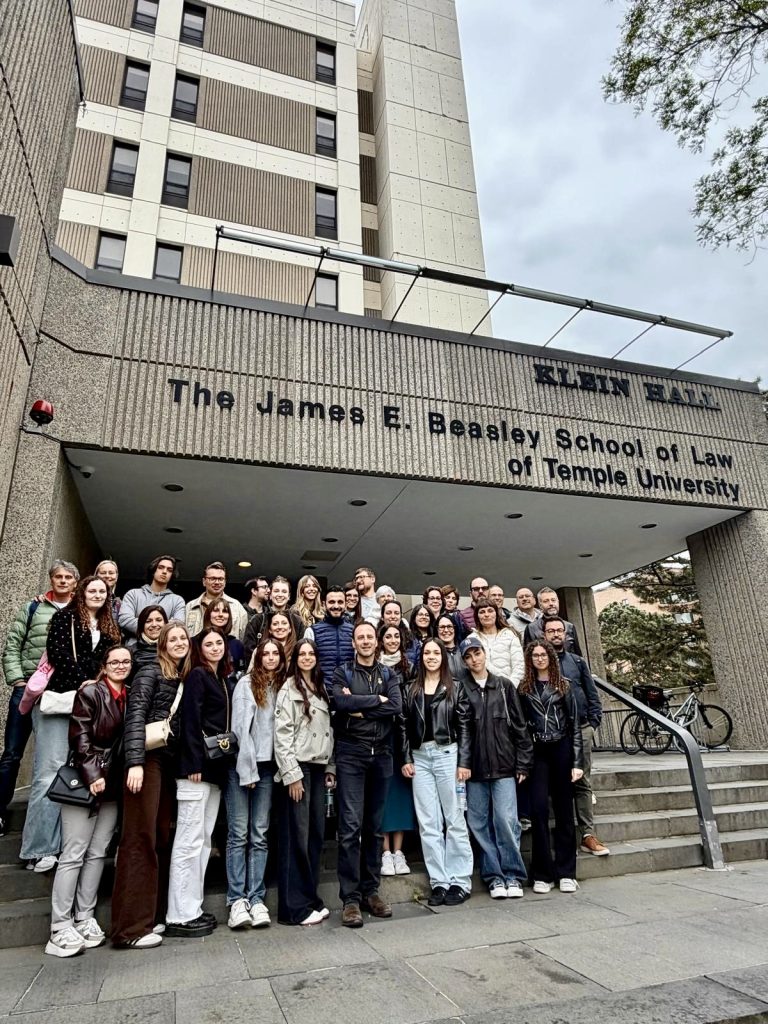
Continuing a decade-long tradition of transatlantic partnership, Temple Law recently hosted over 35 Italian practitioners and students from the EFLIT (English for Law & International Transactions) program. The visit served as a premier example of “One Temple”, demonstrating how the law school’s domestic expertise and international presence in Rome work together to provide a world-class legal education. 

The day’s programming bridged the gap between civil law foundations and common law practice. Professor Emeritus David Sonenshein delivered a comparative analysis of legal reasoning, providing the visitors with the conceptual tools necessary to navigate the U.S. legal system. 

Catriona Davenport, Director of International Programs, addressed a critical skill set for global practitioners: the transition from civil law drafting to U.S.-style legal writing. Her remarks underscored Temple’s commitment to providing international students with the practical communication tools required by global legal employers. 

Interim Dean Kristen Murray, Assistant Dean John Smagula, and Assistant Director Sabriya McWilliams presented a streamlined pathway that connects Temple’s Rome and Philadelphia campuses. By highlighting the success of alumni like Edoardo Corò (LLM ’20), who utilized the Rome Summer Program as a bridge to his Philadelphia LL.M. before joining Jones Day in Milan, they illustrated how Temple’s global footprint creates a seamless professional pathway. 

“We greatly value our partnership with Professor Stefano Maffei and EFLIT,” said Dean Smagula. “By integrating our Rome Summer Program with our Philadelphia LL.M. curriculum, we offer Italian students a cohesive educational experience that is uniquely ‘Temple.’ Whether students are studying in Rome or Philadelphia, they are part of one unified community.” 

Temple Law takes pride in its global platform, and visits like these show that when our campuses and faculty work as one, we create an environment where international students can truly thrive. 

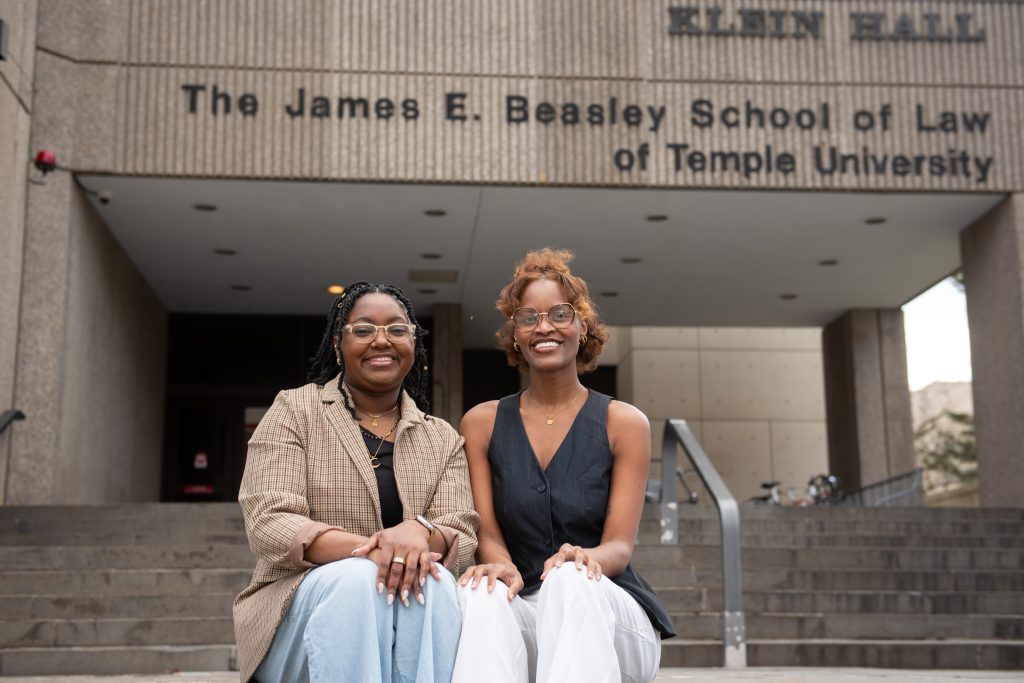
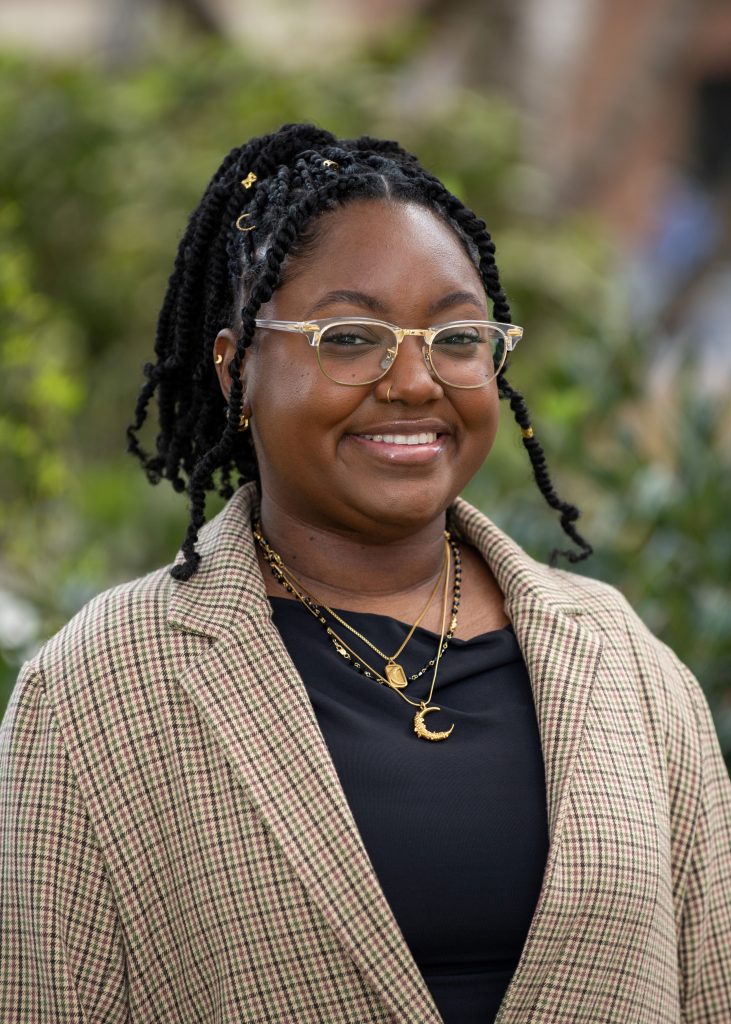
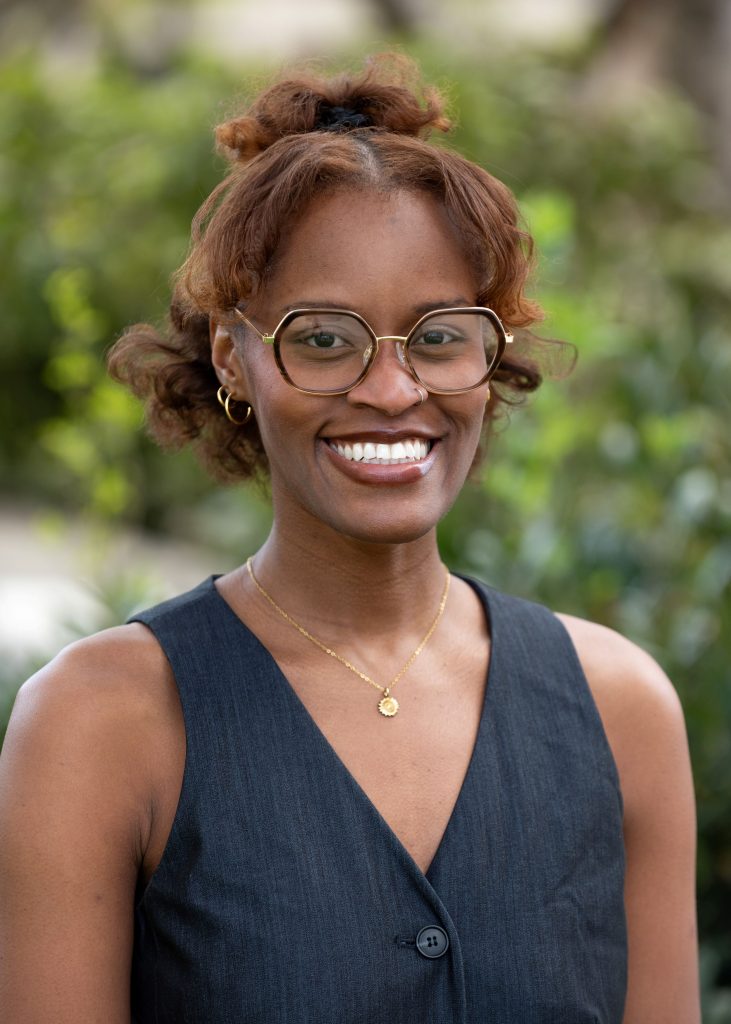
Khadija Wilson (left) and Crissy Carter (right), the 2026 Merritt Fellows, sit on the Klein Hall steps at Temple Law.

Temple University Beasley School of Law’s Institute for Law, Innovation & Technology (iLIT) is proud to announce the 2026 Merritt Fellows, 3LE Khadija Wilson and 2L Crissy Carter.  

Now in its fifth year, the Merritt Fellowship supports Temple Law students pursuing research at the intersection of technology, law, and society. The program provides funding and mentorship to help students explore pressing legal challenges shaped by rapidly evolving technologies.  

“We couldn’t be prouder to honor Khadija and Crissy, two powerhouse social justice advocates focused on those most directly and profoundly affected by decisions about technology’s design, use, and regulation,” said Laura Bingham, Professor of Law and Director of the Institute for Law, Innovation & Technology (iLIT). “As we celebrate five years of this incredible scholarship program and our partnerships with Bill Merritt and InterDigital, we are ever so grateful for their support. They allow us to match our students’ vision and commitment with the resources they need to grow and thrive.” 

Khadija Deniece Wilson: Protecting biometric data in an era of pervasive surveillance 

Wilson’s research examines the legal gaps surrounding biometric data collected by consumer wearable devices, including smart rings, fitness trackers, and smartwatches. These technologies continuously gather deeply sensitive health information yet remain largely unregulated.  

“The stakes are especially high when it comes to reproductive health data. In the absence of meaningful legal protections, this information can be accessed by third parties and state actors and used to surveil, discriminate against, and ultimately exert control over women’s bodies, particularly those of Black and Brown women, who already face compounded vulnerabilities in both the healthcare and legal systems,” Wilson said.  

Her work is grounded in the real-world challenges faced by birth justice organizers and reproductive health advocates, who are already confronting the consequences of this regulatory gap. 

A registered patent agent with a background in biotechnology, Wilson said her perspective shifted during law school as she began to see how quickly technology advances compared to the law—especially when its impacts fall disproportionately on marginalized communities. 

Wilson emphasized that the fellowship’s support will allow her to focus on translating research into meaningful advocacy. 

“Being named to the fifth cohort of Merritt Fellows feels both humbling and urgent,” Wilson said. “My goal is to use this fellowship to learn how to translate research into real advocacy before legislators, policymakers, and the public, so that the law can begin to catch up with the technology already shaping people’s lives.” 

Crissy Carter: Technology, access, and the constitutional right to family integrity 

Carter’s research explores how technological advancements are reshaping family law, particularly in situations where courts rely on communication tools to help families stay connected. 

“Advancements in technology have allowed us to be more connected than ever before. I’m excited to explore how these advancements have impacted family law,” Carter said. 

Her work focuses on how communication platforms are used in high-conflict cases, by families separated by distance, and by those navigating incarceration or government custody. While these tools can offer critical support, Carter is particularly interested in the consequences when they become the only means of maintaining family relationships. 

“I’m most excited to explore the other side of the coin when communication technologies become the only option families have to stay connected,” Carter said. 

Carter’s research raises important questions about access and equity, especially when the costs associated with these technologies limit their availability. 

“The constitutional right to family integrity is for all, and cost should not be what tears apart families when there is technology capable of keeping them together.” 

Carter said she is “beyond grateful” that the fellowship’s financial support creates space to pursue deeper research and experiential learning opportunities, also highlighting the value of mentorship and community through iLIT, which will help expand the impact of her work. 

“The financial support means I don’t have to choose. I can do experiential things and learn through this research opportunity. I’m excited to tap into the network of community leaders and legal scholars to push this field even further.” 

About the Merritt Fellowship 

The William J. Merritt Student Fellowship, established in honor of Bill Merritt LAW ’87, provides financial support and mentorship for Temple Law students exploring topics at the critical intersection of technology, law, and society. Fellows participate in a guided research program and receive individualized support from iLIT faculty and partners as they engage with emerging legal and policy challenges shaped by rapidly evolving technologies. 

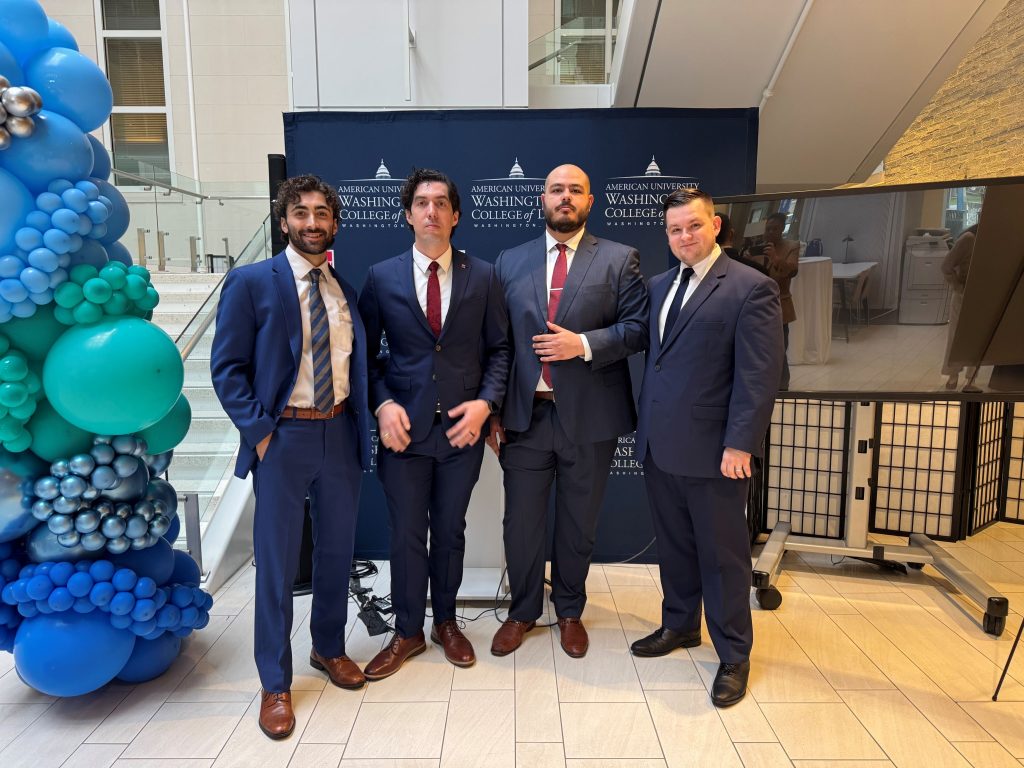
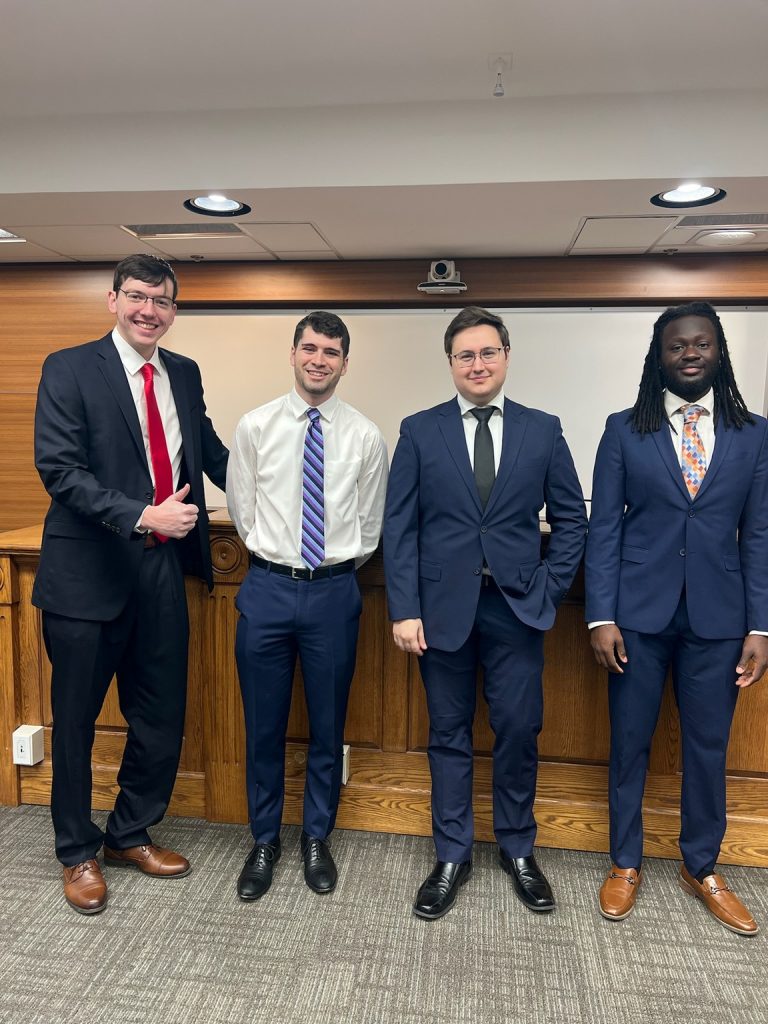
From left to right: Michael Thomas, Tom Loudenslager, Amir Borghaei, and Miron Sergeev.

The Temple Rosner National Trial Team powered its way to a semi-finalist finish in the 2026 Capitol City Challenge, one of the most prestigious trial advocacy competitions in the nation. Third-year law students Amir Borghaei, Tom Loudenslager, Miron Sergeev, and Michael Thomas turned in exceptional performances that showcased their preparation and professionalism, earning accolades from the judges and from coaches Dorothy Hayes (JD ‘24) and Dale Tan. 

“Amir, Michael, Miron, and Tom competed with the tenacity, diligence, and integrity that are the hallmarks of Temple Law,” said Tan. “Each advocate performed at a level of excellence that heralds a brilliant future as attorneys.” Hayes added, “This team went above and beyond what was asked of them in preparing for Cap City. Watching them advocate, I couldn’t be more proud of their hard work and stellar performance.” 

The 2026 Capitol City Challenge brought sixteen teams from top schools across the nation to Washington DC to simulate a complex manslaughter trial. Over the course of the competition, the squad tried the case five times, flipping between defense and prosecution. Loudenslager credits their success to their preparation. “We spent about six weeks practicing the case from every angle we could think of,” he said. “That let us be prepared to expect the unexpected and by the time we got to the tournament, we were able to focus on the material we prepared instead of only reacting to the other side.” 

Thomas offered insight into what that looked like in the weeks leading up to the competition and how it paid off under pressure. “Miron and Tom (both in charge of opening statements) expertly set the tone in each round and received serious compliments from the judges for their ability to captivate the attention of the room,” he said. “While they made it look easy under the bright lights, they should also be commended for the foundation of that success: hours on their own tinkering with each and every facet of their respective messages, and days on end in collaborative team meetings to get to the bottom of what our case theory really was.” 

Sergeev both echoed the pride in his teammates and expressed gratitude for their coaches. “It was a great honor to advance to the semi-finals and come in top four at the 2026 Capitol City Challenge! I’m super grateful for our coaches, Dale and Dot, who trained us to be powerful trial advocates. And I’m really proud of my fellow teammates—Amir, Michael, and Tom—for the strong fight we put up ‘in court,’” he said. “Glad we brought back a trophy to add to the National Trial Team’s growing collection. Go Temple Law!” 

“Dale and Dot were invaluable in getting us ready for the competition,” added Thomas. “Whether through direction, suggestion, or sheer ‘hey let’s see if this might work’ moments, they kept the ship steady and kept us confident in our own abilities. Once we were on the ground in DC, their flexibility, willingness to think outside the box between rounds, and trust in us to handle issues as they arose were gifts. Simply put.” 

Borghaei expressed his pride in representing Temple Law and gratitude for everything he learned. “This competition was a wonderful experience, and I’m thrilled that I had the opportunity to represent Temple at the highest level,” he said. “I’m beyond grateful to my coaches and my teammates, and I feel incredibly lucky to have had the chance to learn and compete in such a fast-paced environment. Even though we may not have gotten the top prize, the experience was invaluable, and I’m sure it will only help me be that much better of an advocate when I eventually start arguing real cases after graduation.”  

Thomas is confident that Borghaei will find success after graduation, too. “As a closer for the prosecution, Amir found ways to totally deconstruct defense arguments on the fly. His responsiveness in the moment on exams, objections, and arguments alike was a joy to watch as a teammate. I don’t know if you can print this, but the guy absolutely killed it and deserves props for how he carried himself. I certainly wouldn’t have wanted to deliver a closing argument after he sat down at the end of his own.” 

When the Pennsylvania Supreme Court held in Commonwealth of Pennsylvania v. Derek Lee that mandatory sentences of life without parole for felony murder violate Article 1, Section 13 of the Pennsylvania constitution (banning cruel punishment), it did so with the input of two members of the Temple Law faculty: Rachel López and Marsha Levick (JD ‘76). Both professors submitted amicus briefs in the case, and the Court’s reasoning built on groundwork laid by Levick and the Juvenile Law Center in a line of US Supreme Court cases banning adult sentences for youth. 

López, who holds the Leonard Barrack ’68 Chair in Law, filed a brief on behalf of a group of UN human rights experts that included Dr. Ashwini K.P., the sixth Special Rapporteur on contemporary forms of racism, racial discrimination, xenophobia and related intolerance; and members of the Expert Mechanism to Advance Racial Justice and Equality in Law Enforcement (EMLER), including Judge Akua Kuenyehia (Chair), Dr. Tracie Keesee, and Professor Juan Méndez. These UN experts’ conclusion that life without parole is a human rights violation resulted from advocacy by López and a broader coalition, which in turn was informed by López’s scholarship. In particular, Redeeming Justice, which was co-authored with Terrell Carter and Kempis Songster, both of whom were sentenced to life without parole, laid out the legal arguments marshalled in the brief. The Court cited Professor López’s brief and its invocation of international human rights law, noting that “Pennsylvania’s use of life without parole sentences is out of step with most regions of the world, which rarely employ life sentences, even with parole; violates international human rights law; and disproportionately impacts ‘Black and Latinx’ Pennsylvanians, in violation of international human rights treaties.”  

Levick, who holds the Phyllis W. Beck Visiting Chair in Law and also filed an amicus brief in the case, was instrumental in a line of US Supreme Court cases from 2005-2016 banning adult sentences for youth as cruel and unusual punishment in violation of the 8th Amendment. In Roper v. Simmons, the Court banned the death penalty for youth under age 18; in Graham v. Florida, the Court banned life without parole sentences for youth under 18 convicted of non-homicide crimes; and in Miller v. Alabama, the Court banned mandatory sentences of life without parole for youth under 18 convicted of homicide crimes. The Juvenile Law Center, with Levick as co-founder and Chief Legal Officer, participated in each case. In holding that mandatory life without parole for felony murder violated the cruel punishments clause of the Pennsylvania constitution, the PA Supreme Court looked to the reasoning in Miller and Graham:  

“Defining with exactness Section 13’s notion of cruelty would be a difficult endeavor; however, this appeal does not call for an exhaustive delineation and we need not decide for all contexts the meaning of the constitutional language ‘cruel punishment.’ Rather, with respect to the unique constitutional challenge before us, we believe it sufficient to consider notions of culpability, severity, and penological justifications ─ akin to the factors identified by the United States Supreme Court in creating its framework in Miller and Graham to resolve its Eighth Amendment jurisprudence regarding juveniles ─ to assess whether the mandatory imposition of a sentence of life without parole for all offenders convicted of second degree murder is consistent with the protections found in Section 13.” 

Levick noted an added significance to the decision: “how important the Pa Supreme Court’s ruling was in holding that our cruel punishments clause provides greater protection than the 8th Amendment and must not be read in lockstep . . . . it is important to remember we have 50 state Constitutions that in many cases provide extremely strong protections for individual rights. The Pa Constitution has numerous provisions that go beyond federal constitutional guarantees.” 

As a final “full circle” note, López added that “Saleem Holbrook, the Executive Director of the Abolitionist Law Center ( the group that litigated this case), was a juvenile lifer freed after Miller v. Alabama” – and will be joining her in the classroom to co-teach a human rights advocacy course next fall. 

“One of the highest priorities at the heart of Temple University’s strategic plan, Forward with Purpose, is place-based impact,” said Interim Kean Family Dean Kristen Murray. “Through their work here and in the cases that came before, Professors López and Levick are advancing this commitment by helping to shape the law in a way that will increase justice for many people throughout the Commonwealth. We’re deeply proud of them both.” 

From left to right: Professor Erika Douglas, 2L Malik Guidry, 3L Dori Hoffman Filler, Professor Donald Harris.

Temple Law 2Ls Malik Guidry, Cassandra Gibson, and Alyssa Pendergrast and 3L Dori Hoffman Filler represented Temple Law with distinction at the Regional rounds of the American Intellectual Property Law Association Giles Sutherland Rich Memorial Moot Court competition, considered the most prestigious moot court competition in the nation. All turned in exceptional performances, and while Gibson and Pendergrast were eventually turned away by a tough Harvard team, Guidry and Hoffman Filler persevered and will advance to the National rounds in Washington, D.C. in mid-April.  

The teams were supported by faculty co-advisors, Professors Donald Harris and Erika Douglas; faculty advocacy and subject matter experts, Professors Salil Mehra, Jules Epstein, and Mary Levy (JD ‘00); alumni Taylor Weilnau (JD ‘24) and Ravi Gandhi (JD ‘25); and 4LE Sam Parrott, a previous competition participant.  

“This is a wonderful accomplishment for our students,” said Professor Douglas. “We have been consistently impressed by their work ethic, professionalism, discipline, and support for one another. Their talent as advocates is clear and their future as Temple lawyers is bright.” 

“It has been a privilege and a joy to watch these four students find their voices as advocates, especially advocates with a passion for intellectual property,” added Professor Harris. “They are all extremely talented. But it takes more than talent. It also takes a tremendous amount of work. They do that, as well. We’re deeply proud of them as our students and look forward to all they will do as graduates and colleagues in the field.” 

“This competition, though certainly challenging at times, brought out the best advocate in me, and has solidified my long-term goal to find a place in appellate work. I was lucky enough to have a partner who not only walked into each round with a readiness to win, but who became a wonderful friend– our success is a direct reflection of Malik’s willingness to spend long nights reviewing material, discussing strategy over the phone, and being a consistent source of encouragement,” said Hoffman Filler. 

Guidry concurred. “This competition has served as scaffolding for the realization that I am capable in a field where people of color are few. I can sometimes be uncertain about my own abilities, but with the support of my teammate Dori, I feel that I am beginning to find my legal voice. Her unwavering belief in me as a teammate was the nudge I needed to break out of my shell and engage in the kind of conversation I enjoy most: a conversation about patents.” 

Hoffman Filler also expressed gratitude for the many members of the Temple Law community who have supported the team along the way. “Our achievement thus far highlights Temple Law’s dedication to its students; from practices with our coaches and faculty to alumni volunteers, law firms, and judges, it took a village. Malik and I are just so proud and humble to have gotten the chance to be a part of it all.” 

The Giles Sutherland Rich Memorial Moot Court competition is named for the late Honorable Giles Sutherland Rich, Circuit Judge of the United States Court of Appeals for the Federal Circuit. The competition is an annual inter-law school event sponsored by the American Intellectual Property Law Association (AIPLA). The National rounds will be held April 15-17, 2026 in Washington, D.C. 

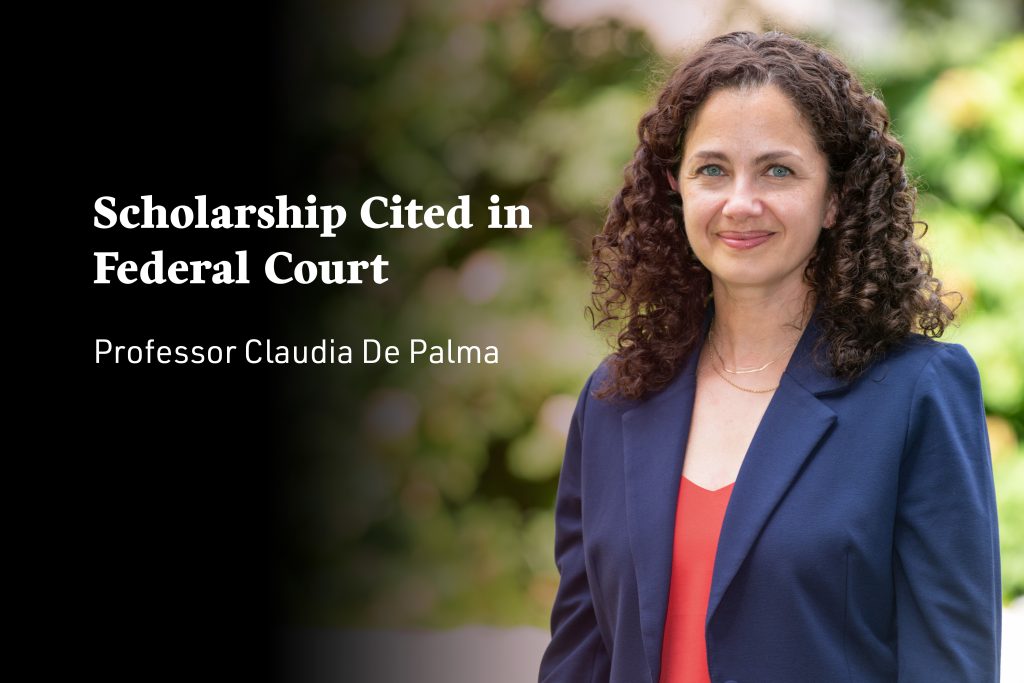
A forthcoming article by Professor Claudia De Palma and co-author Professor Karen Lindell at Penn Carey School of Law, was recently cited by Judge Michael H. Simon of the U.S. District Court for the District of Oregon in Dickinson et al. v. Trump et al., No. 3:25-cv-2170 (D. Or.) as influential in the Court’s consideration of motions by two parties to file amicus briefs in the case. De Palma and Lindell’s paper, “Friendly Gatekeepers: Lessons from an Empirical Analysis of Amicus Briefs in Federal District Courts,” challenges the conventional wisdom that amicus advocacy does not happen at the trial level. 

Dickinson is a First Amendment case arising from alleged assaults by federal officers upon plaintiffs during protests outside the Immigration and Customs Enforcement Building in Portland, Oregon in 2025. The case was brought by the ACLU of Oregon on behalf of protesters and journalists in late 2025, and both the City of Portland and the State of Oregon soon moved to appear as amici curiae in support of plaintiffs. In considering the motions, the Court cited De Palma and Lindell’s findings that while some district courts reject amicus briefs as attempts to introduce new facts, others permit them for a variety of reasons.  

In Friendly Gatekeepers, De Palma and Lindell conducted an empirical analysis of a 20-year longitudinal dataset of federal district court dockets with amicus filings and a dataset of 558 amicus briefs filed in cases initiated in 2019. Among other findings, they documented a rise in amicus filing rates in district courts in cases that have the potential for broad impact, even at the trial level. Using the dataset of cases filed in 2019, they further found that district court amici most often appear in administrative law cases and on motions for preliminary relief, and that they closely resemble their appellate cousins in both substance and role. The article will be published in Volume 45 of University of Texas Law School’s Review of Litigation. 

“From its inception, I hoped our analysis could serve as a bench memo to aid trial-level judges grappling with the proper role of amicus briefs in their courtrooms,” De Palma said. “I’m thrilled to see the article doing just that: providing valuable context about the rarely discussed but increasingly significant phenomenon of amicus filings in federal district courts.”  

De Palma, who joined the Temple Law faculty in 2025, is an Assistant Professor who specializes in legal writing, complex litigation, and public interest law. Her scholarship examines the possibilities, limitations, and consequences of using public interest litigation to remedy systemic inequality and discrimination. Prior to joining Temple Law, she was a senior attorney at the Public Interest Law Center in Philadelphia, where she engaged in impact litigation to advance the civil, social, and economic rights of communities facing discrimination, inequality, and poverty.  

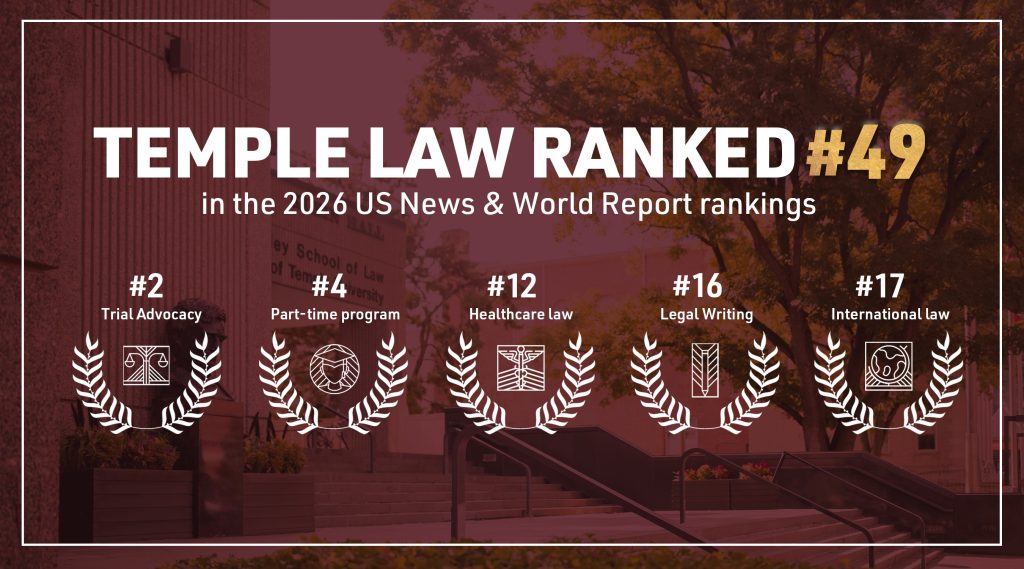
Temple Law ranked #49 in the 2026 U.S. News & World Report rankings

Temple University Beasley School of Law has risen to #49 in the 2026 US News & World Report rankings. The school’s strong overall performance is underscored by top-five rankings for Trial Advocacy (#2) and the part-time program (#4) and top-twenty rankings for Healthcare law (#12), Legal Writing (#16), and International law (#17).  

“I am deeply proud of the work these numbers reflect—especially the work preparing our students for professional success,” said Interim Kean Family Dean Kristen Murray. “Our strategic priorities of student success; nationally recognized excellence; and sustaining a diverse, inclusive law school community are at the heart of everything we do, and these rankings are welcome recognition of that work.” 

Temple’s #4 rank for part-time programs reflects both its origins as an evening school and its ongoing commitment to access, creating a pathway for people with work, family, or other commitments to pursue a high-quality legal education. Its #2 rank in trial advocacy is also an historic strength—Temple has been ranked among the top three schools nationally since US News & World Report started ranking trial advocacy programs in 1995.  

“Trial advocacy remains at the heart of a Temple legal education,” said Jules Epstein, Director of Advocacy Programs and Edward D. Ohlbaum Professor of Law. “We are profoundly grateful both to our exceptional advocacy team at Temple and our peer advocacy educators across the country. But we are not about to rest on tradition — advocacy education can and must keep pace with the evolving landscape of advocacy itself, and that is what we are focused on as we prepare students for practice in tomorrow’s world.”  

“As useful as these rankings are, they are also just one set of data points for applicants to consider,” said Interim Dean Murray. “We’re also deeply proud of our success in both bar passage and job placement, two key measures for anyone considering a law degree. In terms of bar passage, the ABA just published two-year ultimate bar admission data, which tracks the percentage of graduates who pass a bar exam anywhere within two years of graduation, for the Class of 2023. 96.6% of 2023 Temple Law graduates who have taken a bar exam have passed it, a figure that applicants should be aware of as they decide where to begin their journey into the profession.” 

Interim Dean Murray also offered praise for Class of 2025 graduates, whose 10-month graduate employment outcomes set new benchmarks for success in terms of both overall employment (96.4%) and “good jobs,” which are full-time, long-term, bar-required or JD-advantage positions (93.8%). “We are tremendously proud of our 2025 graduates and cannot wait to see what they will do next. Their success first and foremost is a reflection of their hard work, talent, discipline, and drive. It is also a measure of our efforts to prepare them for practice, wherever and however they begin their careers. So as we celebrate the law school’s performance in the US News & World Report rankings, we also celebrate our graduates’ performance in the outcomes that matter most to them—joining the profession and using their Temple Law degree to launch their own success stories. We can’t wait to see how far they’ll go.” 

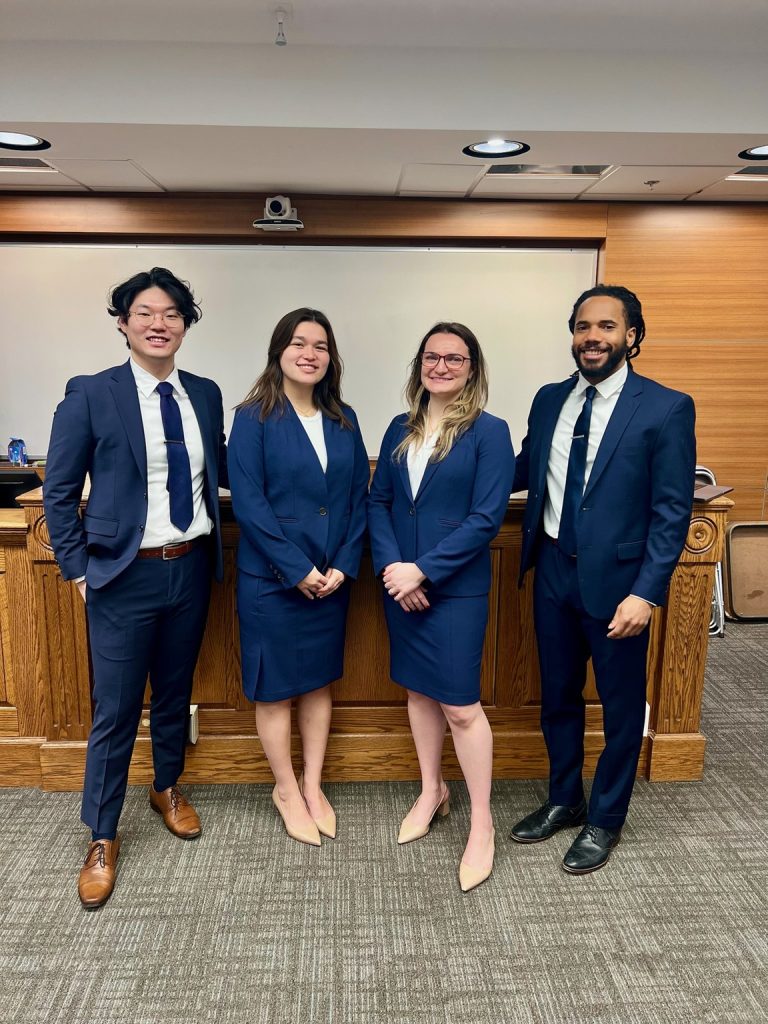
From left to right: Collin Peterson, Steven Armstrong, Taylor Edwards, and Brandon McKay.

The Temple Rosner National Trial Team fielded two squads in the regional round of the American Association for Justice’s Student Trial Advocacy Competition, one of the premier tournaments in the country. The squad composed of 2Ls Katie Chun, Justin Hill, and Nicholas Kim and 3LE Jennifer Levito fought with pride to a semi-finalist finish. The squad composed of 3Ls Steven Armstrong and Taylor Edwards and 2Ls Brandon McKay and Collin Peterson persevered over a tough Harvard team in the final round, emerging as regional champions and earning a trip to the national finals in New Orleans at the end of March. 

The student advocates remarked on the preparation, perspective, and perseverance that success required of them. 

“We lost in the final of this competition last year, so we as a team really wanted to get the win this year,” said Armstrong. “It’s not an easy region to win and our competition consisted of a lot of good teams with a lot of really good advocates. But we knew that Temple and our coaches prepare us for these moments, so we trusted our preparation and each other and got the win.” 

McKay added, “Our success at AAJ this year was a culmination of a year’s worth of trial skills poured into us. The tireless work of our coaches was on full display against the talented array of teams that we had to defeat to punch our ticket to New Orleans, particularly the incredible Harvard team we faced in the final round. It is a privilege to represent Temple while building these practical skills and gaining valuable experiences. I am looking forward to doing it all again in a couple of weeks in pursuit of a National Championship!” 

Edwards offered his gratitude and pride as well. “It was an excellent weekend; I’m most proud of my teammates who stepped up when we needed it the most and made this competition a resounding success. Thank you to my excellent coaches as well- without you all, none of us would be here now,” he said. 

Peterson reflected on the support of the team’s coaches and the performance of his teammates. “Competing in the AAJ tournament was incredibly intense yet rewarding,” he said. “I cannot put into words how grateful I am for all of my teammates (with a special shout-out my co-counsel Steven Armstrong) and our three coaches, whose support and guidance we needed to bring the trophy home to Temple, where it belongs.” 

From left to right: Nicholas Kim, Katie Chun, Jen Levito, and Justin Hill.

Levito found perspective and pride as an advocate in the words of her coaches. “Justin, Katie, Nick, and I put up a great fight against some incredibly competitive schools this past weekend at AAJ. We advanced to the semi-finals, and I could not be more proud to have gone through the battle with these three advocates.” 

She continued, “While it is disappointing that we will not be joining our other squad at Nationals, this weekend reinforced an important lesson our coaches continually remind us of: the goal is bigger than the round in front of us. Trial advocacy is not just about winning a single round—it is about preparing to become advocates and litigators who fight for what truly matters when we step into the courtroom after law school. I am incredibly grateful for this team and the experience we shared.” 

In addition to fielding competitors, Temple Law School played host to the competition itself, which required significant coordination behind the scenes. This included organizing the tournament logistics, recruiting judges and practicing attorneys to evaluate the rounds, and arranging the CLE programming that was presented before each round of competition. Professor Elizabeth Lippy (JD ‘03) served as both host and coach, along with Erika Storms and Chris Moore (JD ‘23).  

“This win is huge for Temple,” said Professor Lippy. “Coupled with the NTC Regional win just two weeks ago, it shows that our program and students are a force to be reckoned with. This particular group of students are some of the smartest and most talented I’ve had the honor to teach and coach. But I also want to note the kind nature displayed by each of them. They all cared more about the team than their own individual needs… I didn’t get to watch any of their rounds of competition because I was hosting the event, but by all accounts from the coaches, the judges who scored them, and even the teams we competed against, all of our students were professional, graceful, and incredible representatives of the Temple way.” 

Coach Erika Storms added, “Honored to coach a championship team with a championship mindset. Our students and coaches worked tirelessly to win. This regional is known as one of the toughest in the nation with many other top teams and the need to be pretty much perfect in all rounds. The margin for error is slim to none. Our squad being undefeated in all rounds shows the mental toughness, resilience and determination needed to win in New Orleans. We are ready to take on the nation’s best.” 

The Temple Rosner National Trial Team from left to right: from L to R: Professor Jules Epstein, Madison Smith, Rachelle Casement (crouching), Marco Granston, Marissa Bluestine, Alex Rowland, Kai Burton, Blake Lowry, Nick Guth.

The Temple Rosner National Trial Team 3L squad took top honors as Region Three champions and will advance to the National Trial Competition, held in Texas later this spring. Temple’s 2L squad also excelled, finishing as semi-finalists in just their second Temple competition. Both squads were coached by Professor Jules Epstein, Marissa Bluestine (JD ’95), and Nick Guth (JD ’20). 

The competition began with a field of 21 teams from 11 schools. Temple’s 3L team, which included Rachelle Casement, Marco Granston, and Madison Smith, litigated the case five times across the weekend, sometimes as prosecution and others as defense. The 2L team of Kai Burton, Blake Lowry, and Alex Rowland was ranked number 1 at the end of the first three rounds, and finished as semi-finalists after an extremely close fourth round.  

The competitors drew on the support of their teammates and coaches, gaining confidence through hard work and taking pride in the opportunity to represent Temple Law with excellence. 

Rachelle Casement, who competed on the 3L team as both prosecution and defense, said the experience was “overwhelming in the best way.” “Coming back to this regional competition as a 3L—stronger and more confident—and finally earning the bid to nationals was a dream come true. We kept our foot on the gas from start to finish, and I cannot wait to bring that same energy to the national competition next month,” she said. “This truly took a village. Our success reflects the support of our teammates and the mentorship of our coaches, who push us to be better advocates and encourage us to show up as our authentic selves.” 

3Ls Madison Smith and Marco Granston noted the value of hard work and persistence, pursued within a “community of support.” “Our success is the result of countless late nights, early mornings, and weekends spent preparing alongside our coaches and teammates,” said Smith. “We were extremely fortunate to have had so many dedicated Temple law students, friends, and family volunteer their time to help with scrimmages and practices. Their support made the difference and helped us polish our materials by gaining outside perspectives.” “Our victory at the Regional Trial Competition did not come easy,” added Granston. “It was a culmination of hard work, persistence, and constant refinement. None of it would have been possible without our community of supporters including friends, family, and, of course, our brilliant coaches. This is a shared victory, and it reflects Temple Law’s continued dedication to developing its students’ trial advocacy skills.” 

“Our competitors on both teams represented Temple Law brilliantly,” said Professor Jules Epstein. “They exemplified what Temple trial advocacy has always been about: hard work, teamwork, professionalism, and pride. They had the opportunity to learn from two Temple Trial Team legends, Marissa Bluestine and Nick Guth, and now have the chance to build their own legacy as part of our history and future. We are truly Temple Proud.” 

Competitors on Temple’s 2L team noted the hard work, pride, and confidence that come with participation on the Temple Rosner National Trial Team. “I always knew I wanted to be a trial lawyer, that’s why Temple University was my number one choice for law school. Temple’s Trial Ad Program and the National Trial Team have changed my life, not just giving me the tools to be a confident advocate in the courtroom but in my personal life as well,” said Blake Lowry. “I’m immensely thankful to my coaches and teammates for all the work that went into this weekend.”  

Kai Burton noted that along with the hard work, there was some fun as well. “I had a great time competing in the Regional Trial Competition! Seeing all the hard work my teammates, coaches, and I put in this past semester culminate in such a rewarding weekend was an incredible experience,” she said. 

 “I couldn’t have done it without my incredible teammates, and we owe so much to our phenomenal coaches,” said Alex Rowland, who like Casement competed as both prosecution and defense. “Every moment of the competition reminded me why I chose Temple Law: excellence in advocacy.” 

Congratulations to the Temple Rosner National Trial Team on another outstanding performance!