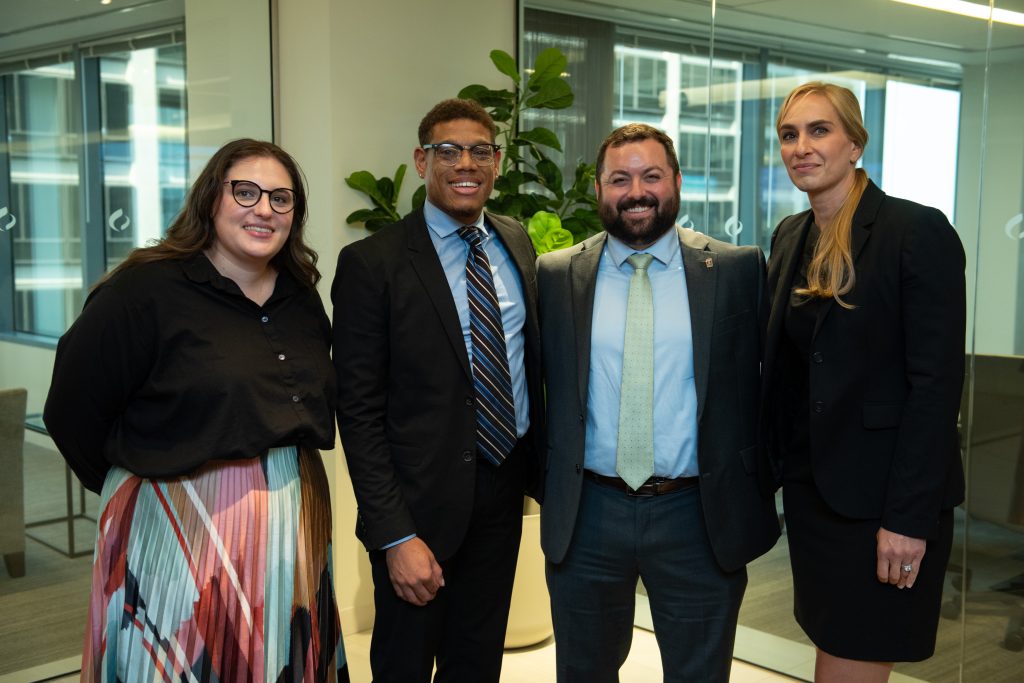
Temple Law’s Office of Career Services (OCS) has been renamed Career Strategy & Professional Development (CSPD), a change that reflects the office’s evolution into a more proactive, student-centered resource focused on long-term career planning and professional identity formation. Assistant Dean for Career Strategy & Professional Development Jim Walsh discusses the reasoning behind the change, the office’s expanded approach to supporting students, and how CSPD helps prepare graduates for success in today’s legal profession.
What prompted the shift to Career Strategy & Professional Development, and how does it better reflect what the office has been doing?
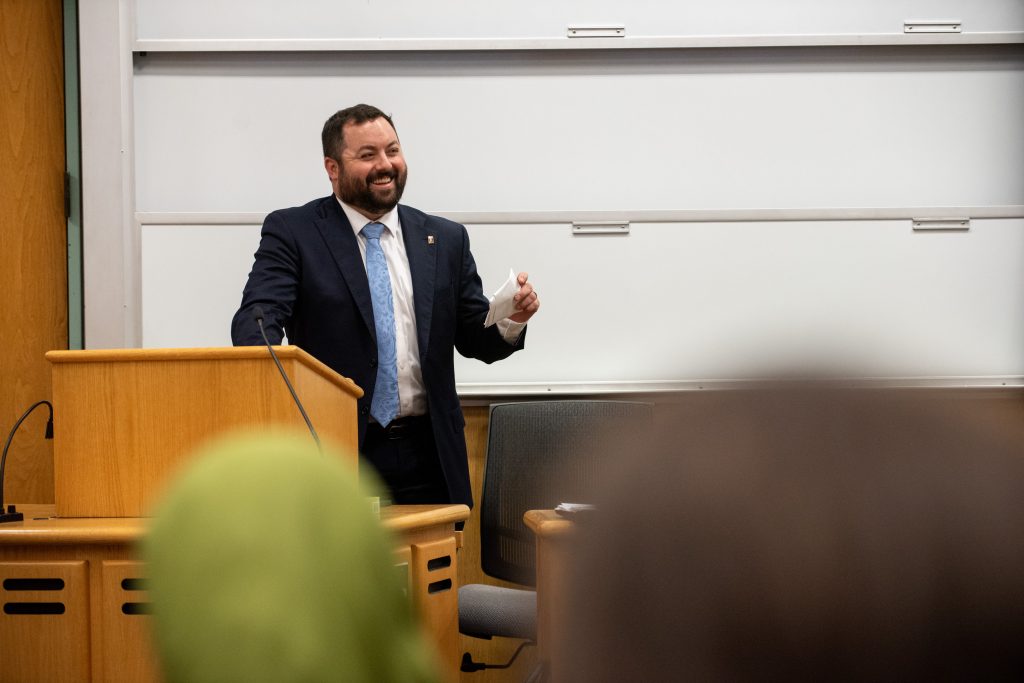
We decided to shift from “Office of Career Services” to “Career Strategy & Professional Development” to better reflect the full scope of our work. The addition of “Professional Development” recognizes the Comprehensive Professional Development Program we’ve built over the past several years. Through a mix of live programming and on-demand modules, the program helps students define their values and goals, understand the legal landscape, and develop the skills needed to navigate it. We’re proud of what we’ve built so far and excited to continue expanding these offerings.
The move from “services” to “strategy” also reflects a more proactive approach. While we support students in real time, our most impactful work is helping them plan not just for the immediate future, but for the long and winding career path ahead.
The change also helps address a common misconception. Because OCS was sometimes conflated with OCI (On-Campus Interviews), some students assumed our office primarily focused on Big Law recruiting. In reality, we support students pursuing a wide range of careers, including public interest, government, judicial clerkships, small and mid-sized firms, and JD Advantage roles. We want the entire Temple Law community to understand that we’re here to help students define their own goals and achieve them.
Can you walk us through the core resources and programs you offer students today, and how those evolve from a student’s first year through their final steps into the professional world?

Our core offerings are the Comprehensive Professional Development Program and one-on-one advising, which together provide both structure and individualized support.
Through the Program, students build skills in areas such as application material development, interviewing, networking, and professional communication, while also gaining a clearer understanding of the wide range of opportunities within the legal profession. Just as importantly, they engage in professional identity formation—identifying the values that will guide their decisions and shape the kind of attorney they want to be. Identifying those values can serve as a North Star throughout their careers, helping them navigate changes to their goals and priorities.
This work evolves over time. In the first year, students focus on building a foundational understanding of the profession, their skills, and their goals. From there, they expand their exposure to different practice areas, refine their skills, and further develop their professional identity. As graduation approaches, we focus on helping students bridge the gap from law school to practice so they can enter the profession with confidence.
One-on-one advising is the throughline across that entire experience. We require first-year students to meet with our office and all graduating students to complete an exit interview, and we encourage regular engagement in between. Last year alone, our four career advisors conducted more than 1,500 one-on-one appointments, allowing us to provide tailored guidance that meets students where they are and supports the goals they’ve set for themselves.
As employer expectations around student readiness evolve, how does your office prepare students to meet them?
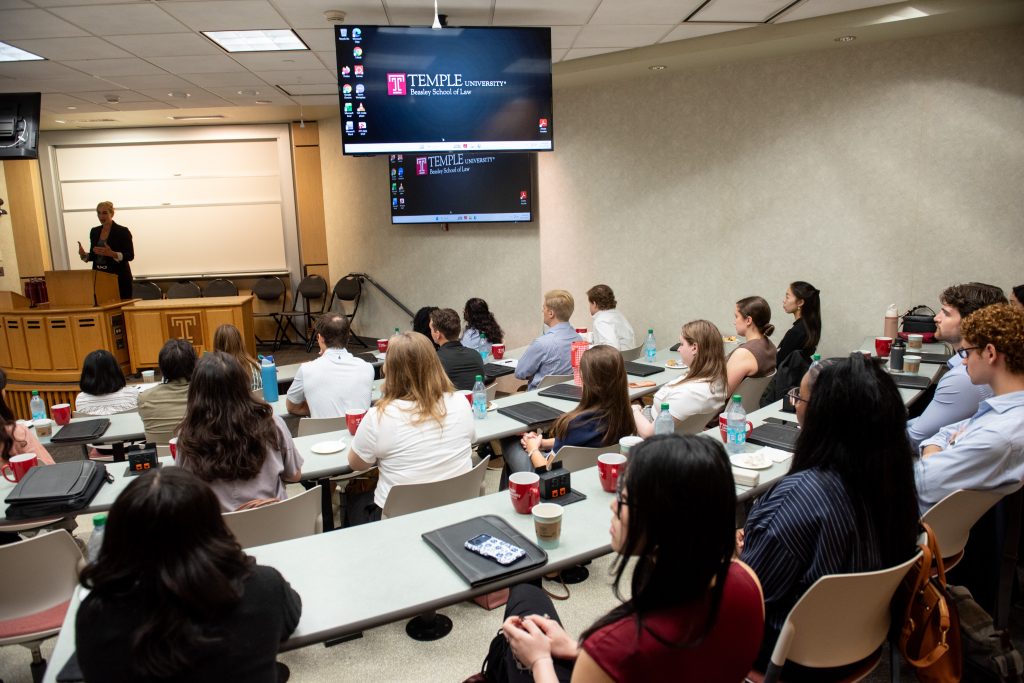
It is true that employer expectations around student readiness have evolved, as employers have moved away from on-the-job training and placed greater emphasis on practice readiness right out of law school. In response, our team has focused on developing resources that help students bridge the gap between law school and the profession as we continue to build the Comprehensive Professional Development Program.
That said, the best way for students to meet employer expectations is to gain practical experience during law school. Temple Law excels at providing those opportunities through our clinics, externships, trial advocacy programs, journals, student organizations, and other experiential learning opportunities. These experiences are a major reason why employers consistently seek out Temple Law students and graduates.
The Comprehensive Professional Development Program is designed to supplement practical training by helping students better understand the realities of legal practice and develop the professional skills needed to succeed in the profession. Current and emerging programming includes topics such as developing a professional network, building a career at a small or mid-sized law firm, and exploring opportunities in compliance and ethics. As the program continues to evolve, our goal is to build a robust library of resources that students can access throughout their legal education, ensuring they graduate with not only strong legal knowledge and practical experience, but also the professional competencies employers increasingly expect.
In what ways have your office’s efforts positively impacted students’ career paths?

The clearest indicator has been student engagement. Through the Comprehensive Professional Development Program and one-on-one advising, we aim to provide students with the tools, resources, and individualized guidance they need to take ownership of their careers and thrive as self-directed professionals.
One-on-one advising is our most effective tool in that effort because it allows us to meet students where they are and support the goals they’ve identified for themselves. In the years before the Comprehensive Professional Development Program was established, our office averaged a little more than 800 advising appointments annually. Since then, that number grew to roughly 1,250 appointments per year over the last several years, and we just surpassed 1,500 appointments this past academic year. To me, that increase in engagement is one of the clearest signs that students are finding value in the support we provide.
Our students have also seen tremendous success in the job market, with multiple consecutive years of record-setting employment outcomes. While we are proud of those results, employment outcomes are influenced by many factors, including the strength of our students, faculty, alumni network, and the legal market itself. For that reason, I’m hesitant to point to employment statistics alone as a measure of our success. At the same time, it is difficult to ignore the correlation between increased student engagement and these strong outcomes, and we believe the structure and support provided through the Program have played an important role in helping students navigate their career paths successfully.
Looking ahead, what’s your vision for how Career Strategy & Professional Development will continue to grow and support students?

Our core focus will remain a student-centered approach built on accessibility, approachability, and expertise. One-on-one advising and the Comprehensive Professional Development Program will continue to serve as the foundation of that work, allowing us to provide strategic, individualized guidance that helps students define and pursue their own goals.
From there, we’re focused on continuing to expand our on-demand professional development offerings, strengthening our network of employers and alumni, and creating more opportunities for students to engage directly with those communities. The goal is to ensure that every Temple Law student has both the strategy and the support they need to navigate their career with confidence, from their first year through long-term professional success.