Updated April 2026: Amanda Covaleski Earns Second Place in ABA RPTE Student Writing Contest
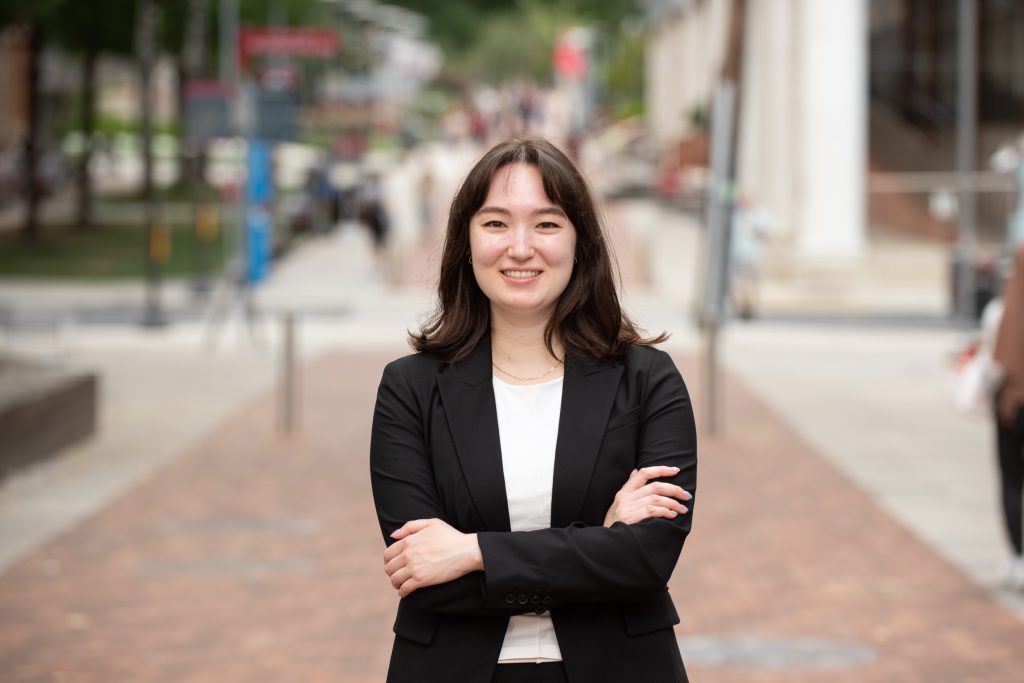
Temple Law student Amanda Covaleski has earned additional national recognition for her scholarship on copyright inheritance, receiving second place in the 2025 American Bar Association Section of Real Property, Trust & Estate Law Student Writing Contest.
The ABA RPTE Student Writing Contest is a national competition that recognizes outstanding law student scholarship in real property, trust, and estate law. Open to students at ABA-accredited law schools, the contest draws submissions from across the country and awards top entries for original, timely legal analysis, with opportunities for publication and professional recognition.
Selected from a highly competitive pool of submissions, Covaleski’s award includes a $1,500 prize, one year of Section membership, and the opportunity for her article to be published in the Real Property, Trust & Estate Law Journal. The honor builds on earlier recognition of her work, further highlighting the impact and relevance of her analysis of copyright and inheritance law.
Original Article from September 22, 2025:
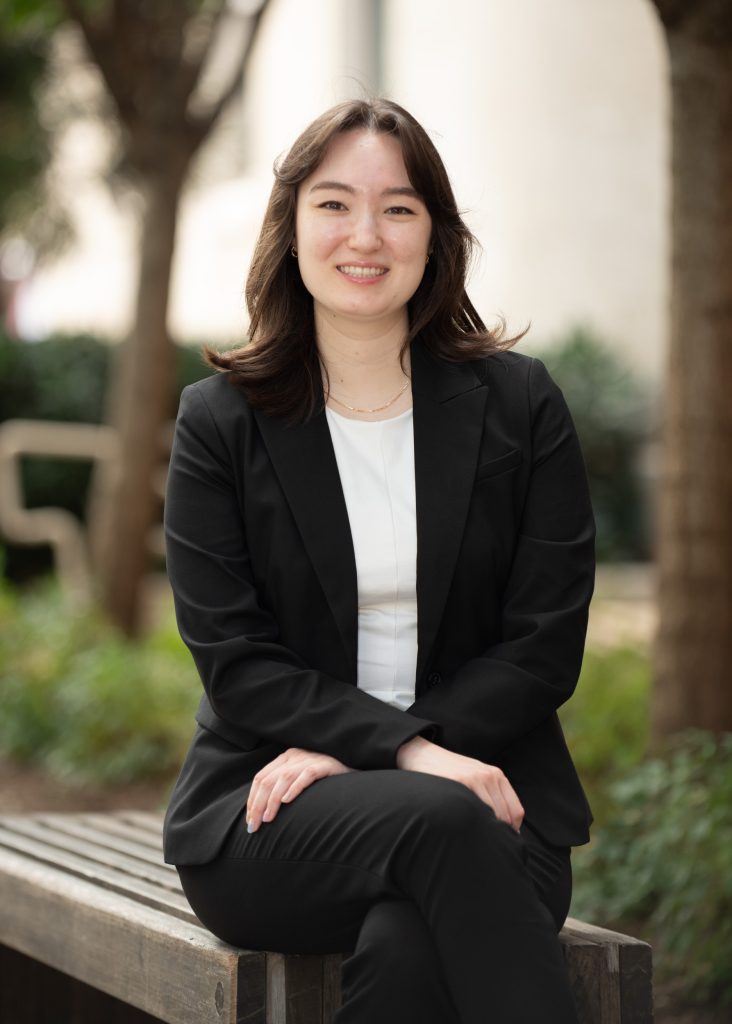
Amanda Covaleski, 3L, has earned second place in the American College of Trust and Estate Counsel (ACTEC) Foundation’s national Mary Moers Wenig Student Writing Competition, a prestigious award that recognizes outstanding legal scholarship in trust and estate law. Each year, the competition draws submissions from law students across the country, with only a handful selected for recognition.
Originally written as her Temple Law Review research paper, “Inheriting the Right to Reclaim: When Copyright Termination Rights Supersede Testamentary Wishes” examines a little-explored mismatch between intellectual property and testamentary freedom. Under the Copyright Act of 1976, authors have a statutory “termination right” that allows them to reclaim works they had previously assigned after 35 years. But, when an author dies, the law strictly limits which heirs may inherit and exercise that right, regardless of the author’s will.
“I started thinking about how termination right inheritance worked from a practical standpoint, but it seemed like there was a gap in the scholarship as most of the articles were around 10 years old,” Amanda said.
A graduate of Tufts University, where she majored in International Relations, she was drawn to interdisciplinary and comparative topics, and after conversations with Professors Guy Rub, Amy Sinden, and Kathy Mandelbaum, she focused on the overlap between copyright and inheritance laws.
“Professor Mandelbaum helped me take a nebulous topic and whittle it down to a workable thesis,” Amanda said. “Her pragmatic outlook really helped me write a paper that isn’t just an academic think piece, but one that explores real consequences of a policy change.”
“Amanda’s paper examines the consequences of the conflict between two quite separate areas of law, while estate law generally furthers testamentary freedom, copyright termination law substantially reduces that freedom,” Professor Kathy Mandelbaum explains. “As Amanda’s paper notes, copyright law limitations can be a trap for the unwary, as those technical workarounds are not well-known and are, in any event, expensive to implement.”
Professor Guy Rub explains that even sophisticated parties, like the Ray Charles estate, fell into the trap of copyright termination right.
“The copyright for his works ended up with members of his family, as dictated by the Copyright Act, defeating Charles’s clear and express preference to bestow them on his foundation to support blind artists. Amanda’s well-researched and well-written paper explores this case, and others like it, casting a shadow over the overall justification for copyright law’s frustration of a deceased artist’s choices.”
When she learned that her work had been recognized with an ACTEC award, Amanda said she was “extremely happy and honored.”
“I spent my entire 2L year working on the paper, so it felt great to have my work recognized and know someone else found the topic interesting,” she said.
“Her paper drew on many areas of law: the common law of estates, state inheritance law, technical copyright law, and practitioner ‘how-to’ articles,” Professor Mandelbaum said. “She was equally adept at mastering and explaining all of these sources of law, writing a paper that advanced the literature both theoretically and pragmatically. I was very impressed with her work.”
Amanda will continue to explore IP this fall in Professor Mark Rachlin’s IP Licensing class and will gain hands-on experience with estate planning through the Community Lawyering Clinic, after which she hopes to make pro bono estate planning part of her professional practice.
To her fellow Temple Law classmates, she offered this advice: “Don’t self-select out of opportunities. If it weren’t for that advice and Professor Mandelbaum’s encouragement, I probably wouldn’t have sent my paper into any writing competitions. While it was nerve-wracking to share my work with estate planning professionals and it took some effort to get the paper in compliance with the competition’s formatting rules, it definitely paid off and I’m glad I took the chance.”