Digital Darkness: How Governments Use Digital Repression to Silence Dissent
By: Atoosa Haghani, LAW ‘27
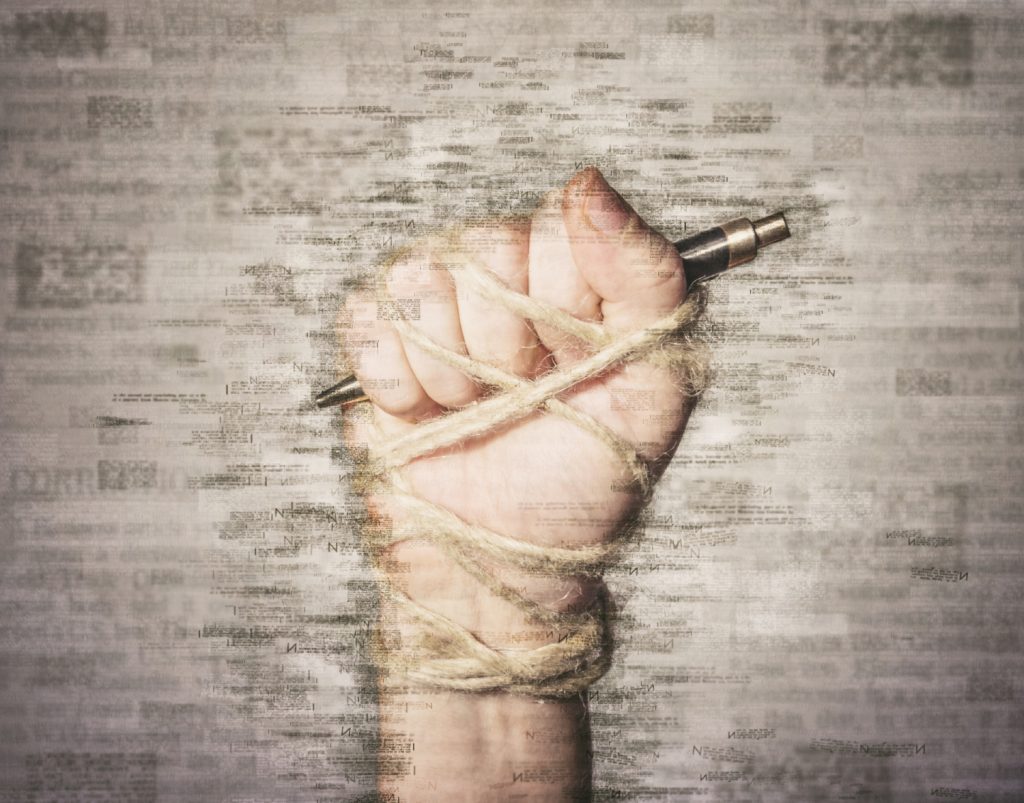
It begins with silence.
Not the absence of noise, but a forced muting, of protests, press, and pain. The Wi-Fi is suddenly out. Social media goes dark. Text messages stop delivering. Entire regions vanish from the internet in seconds.
“We’ve lost contact.”
“No service.”
“I can’t reach my family.”
These phrases have become common in regions gripped by authoritarianism, political unrest, and even in so-called democratic states. Entire populations are being silenced not just by bullets and prisons, but by digital repression. Digital repression is a growing set of tools that includes internet shutdowns, targeted doxxing, and coordinated disinformation campaigns. Despite small-scale workaround technologies like VPNs and personal satellite systems, these shutdowns and intimidation tactics achieve their primary goals of fragmenting resistance and controlling information flow.
This post covers three primary tools of digital repression: government-mandated internet shutdowns, targeted doxxing as a form of digital intimidation, and disinformation campaigns. While complete internet blackouts can have more widespread and immediate effects and are more readily associated with digitally repressive states, established democracies like the US have adopted subtler but equally damaging forms of online control that serve the same fundamental purpose: limiting what people can see, say, and share.
How Governments Shut Down the Internet
A nationwide internet blackout is rarely as simple as “pushing a button.” Instead, governments use their power over the internet and telecommunications companies to block or limit access. Under broad legal authorities that cite “national security” or “public order”, officials can force companies to comply with emergency orders that restrict people’s ability to get online.
For example, a Minister of Information and Communications Technology might instruct the country’s largest telecom provider to disable mobile data nationwide, which is what happened in India during protests in Kashmir and Ethiopia during armed conflict. In other cases, the restrictions are more subtle; providers might slow the internet down so much that basic browsing becomes impossible. Providers can also block specific websites and apps by targeting their IP addresses or changing domain settings so people cannot reach them. After the 2021 military coup in Myanmar, authorities repeatedly ordered telecom companies to cut internet access altogether, leaving millions disconnected for days at a time.
In September 2025, Nepal’s government blocked 26 social media platforms, including Facebook, X, YouTube, LinkedIn, Reddit, Signal, and Snapchat, requiring platforms to register locally and appoint grievance officers. This started a digital rights dispute resulting in massive Gen Z-led protests. The government’s attempt to silence dissent severely backfired and at least 72 people were killed in the protests and ultimately forced the Prime Minister to resign. This demonstrated how digital repression can trigger broader political upheaval when populations refuse to accept enforced silence.
These tactics are highly effective. They disrupt organizing efforts, block the circulation of evidence documenting human rights abuses, and prevent outside observers from understanding what is happening on the ground by isolating populations. These shutdowns often target and hit hardest on marginalized communities that are already economically vulnerable.
Why Do Governments Shut Down the Internet?
The logic is simple—information is power. Social media and encrypted messaging apps have fundamentally transformed how political action is organized, how state abuses are exposed, and how international support is mobilized. When governments feel threatened by mass protests, war crime investigations, or calls for regime change, digital communication networks represent an existential threat to their control.
In today’s interconnected world, access to the internet is no longer a luxury; it’s a lifeline. It provides access to information within seconds and within a matter of a few clicks. Most importantly, it offers a platform for organizing and truth-telling. Blackouts aren’t just digital inconveniences; they are direct assaults on human rights, expression, and public accountability.
Where These Shutdowns Are Occurring
In 2024 Access Now identified at least 23 countries as having high risk for internet shutdowns during election periods, with documented shutdowns in: Azerbaijan, Pakistan, India, Mauritania, Venezuela and Mozambique. These shutdowns coincided with elections, protests, and armed conflict—precisely the moments when populations need reliable access to information most urgently.
India recorded 84 shutdowns in 2022, nearly half of the 187 documented globally. Between 2016 and 2023, India shut down the internet 771 times, especially in regions like Manipur, Jammu, and Kashmir with some lasting weeks or months. These blackouts are particularly disruptive because India has accelerated towards a digital-first economy, where people depend on the internet for banking, access to government benefits, education, and even food delivery. Despite the enormous social and economic cost, internet shutdowns in India face few legal hurdles. Police and magistrates can order blackouts for vaguely defined reasons like “public order,” without any need for judicial approval.
In 2022, during protests in the Republic of Karakalpakstan, an autonomous region in Uzbekistan, over proposed constitutional changes that would limit the region’s autonomy, Uzbekistan’s government restricted both mobile and fixed-line internet access, as authorities reportedly arrested journalists, detained bloggers, and even reportedly tortured some for covering the unrest. Freedom House rated the country “not free” for internet access, noting that internet freedom deteriorated significantly due to these measures. While some social media platforms later regained access, others like TikTok remain blocked.
In Mauritania, mobile internet was cut nationwide in March 2023 following the escape of four prisoners, echoing earlier restrictions during the contentious 2019 presidential election. These actions show how shutdowns are employed both in response to immediate crises and as preemptive political controls.
The Human Toll of a Digital Blackout
As Azadeh Akbari, a researcher of cybersurveillance at the University of Twente, in the Netherlands, puts it: “Social media is existential to the mobilization of protesters, not only to coordinate gatherings but also to amplify acts of resistance.”
In occupation and war zones like Gaza, internet blackouts are a tool of warfare, allowing atrocities to occur with reduced international scrutiny. During Israeli military operations, repeated blackouts severed communication channels, making it impossible for civilians to call ambulances, upload videos of strikes and famine, or reach their families. As NPR reports, some of these blackouts stem from direct attacks on telecom cables, while others were the collateral result of strikes on critical infrastructure. These blackouts are not simply byproducts of war; they are deliberately engineered to prevent the outside world from witnessing state violence and genocide. and genocide.
The U.S. Is Not Immune
The United States has never implemented a nationwide internet shutdown, but federal authorities have demonstrated both the intention and ability to control digital information spaces through alternative mechanisms. The U.S. employs an approach of blurring the line between government oversight and intimidation, operating through corporate intermediaries and legal frameworks. This approach relies on government pressure on tech companies, legal threats, and platform policy manipulation to achieve similar goals of controlling information flow during critical moments of online and offline civic engagement. For instance, during COVID-19 and the 2020 election period several federal agencies sent repeated “requests” to platforms to remove posts about vaccines or election integrity, shaping the architecture of visibility and discourse.
When Twitter (now X) fact-checked Trump’s false tweets alleging mail-in ballots would lead to widespread voter fraud. In May 2020, he issued an executive order targeting Section 230 of the Communications Decency Act. The order directed federal agencies to explore ways to limit platforms’ legal immunity if they engaged in “editorial conduct,” warning companies that moderating political speech could invite government retaliation. Although the executive order could not change Section 230, it brought light to the administration’s intent to influence online discourse through regulatory pressure rather than law. By threatening companies like Twitter and Meta with liability, the order pressured platforms to allow political misinformation to circulate unchecked. In the wake of Trump’s election in 2024, major platforms have scaled back political fact-checking and content moderation, creating space for disinformation to spread.
While the executive order and its pressure focus on moderating behavior, the effect is that private actors and intermediaries receive more freedom to set the terms of their digital engagement. This approach achieves similar manipulative effects in the online information ecosystem as overt shutdowns in the guise of free speech protection. When student activists protesting U.S. foreign policy are systematically doxxed, when broadcasters are repeatedly threatened to strip them of their licenses, and when grassroots organizers face digital harassment campaigns, these all represent American-style digital repression.
Doxxing as Digital Intimidation
During Trump’s second administration, student activists protesting U.S. complicity and aid to Israel during the genocide in Gaza are facing digital retaliation in the form of doxxing. Doxxing is the practice of publicly revealing personally identifiable information about individuals without their consent.
Organizations with clear political alignments have published names, photographs, and personal information of student protesters, many of them international students who face potential immigration consequences. This systematic targeting serves to “shame, humiliate, bully, harass, or otherwise harm individuals” engaged in constitutionally protected political speech. The practice aims to “intimidate and direct violence at someone,” resulting in many activists who speak out on issues like mass genocide, and advocating for basic human rights scared for their safety, professional prospects, and legal status.
Digital Repression Is a Global Trend
Whether through firewalls, shutdowns, or surveillance, governments around the world are escalating their control over the digital realm. The tools vary by country, but the playbook is familiar. In China, censorship and AI-driven surveillance are totalizing. In Russia, social media platforms are blocked to stifle war criticism. In the U.S., private actors with political influence are using online intimidation and legal threats to suppress free speech. The broader pattern is clear, governments fear connectivity during times of uncertainty. Because in a connected world, people can tell their own stories. They can resist, organize, and fight back. Because in a connected world, people can tell their own stories. They can resist, organize, and fight back.
Connectivity Is a Human Right
The ability to connect is a human right. Article 19 of the Universal Declaration of Human Rights establishes the right to freedom of expression. The UN has consistently affirmed that cutting off internet access violates international human rights law. International law increasingly recognizes the right to internet access as fundamental to freedom of expression and political participation.
But as shutdowns and government-led digital intimidation become widespread, that right is under threat. Governments must be held accountable, not only for when they go dark, but for why. If a regime cannot tolerate scrutiny, it doesn’t need a blackout. It needs reform. Until then, we must defend digital freedom, not just for ourselves, but for everyone whose voices flicker and vanish each time a government flips the switch, in an effort to suppress truth.
Atoosa Haghani is a second year J.D. student at Temple University Beasley School of Law and Fulbright Scholar alumna. Her interests include International sanctions compliance, International trade law, and animal welfare policy.
This blog is a part of iLIT’s student blog series. Each year, iLIT hosts a summer research assistant program, during which students may author a blog post on a topic of their choosing at the intersection of law, policy, and technology. You can read more student blog posts and other iLIT publications here.