Whiplash – Can the Administrative State Stay “Deconstructed”? The Legacy of the Trump Administration
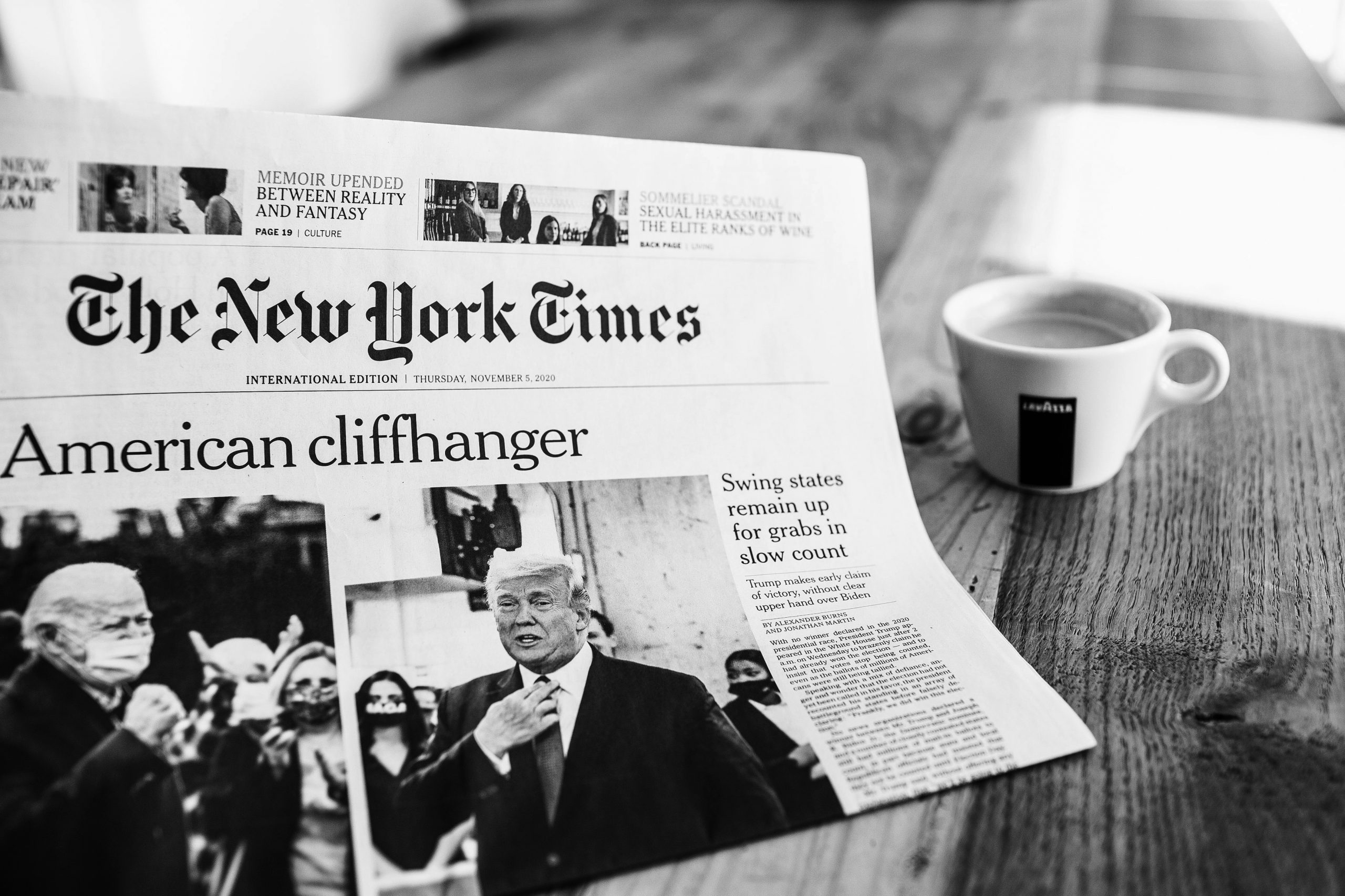
Former Conrail General Counsel and Temple Law alumni Jonathan Broder discusses the regulatory implications of the incoming Biden Administration.

This Month from the Temple Law Center for Compliance and Ethics: Ethics and compliance champions play a critical role in enhancing program effectiveness with technology and personal leadership. A trusted champion can encourage more people to speak up internally, early and often. A human review system in business units and local offices where risks occur is one of the biggest opportunities for an organization.
COVID-19 is the new virus this country has been preparing to take on for decades – and has, so far, failed miserably to stop. While peer countries have managed to get it under control, the United States faces rising cases and deaths. This has been, first and foremost, a failure of leadership and the implementation of an effective response.
On October 7, 2020, the Securities and Exchange Commission (SEC) adopted Rule 12d1-4 and other amendments under the Investment Company Act of 1940, as amended, which streamline and enhance the regulatory requirements for registered investment companies and business development companies to acquire shares of other funds in excess of the limits in Section 12(d)(1) of the 1940 Act.
Effective October 3, 2020, the Pennsylvania Department of Labor & Industry (L&I) has updated Pennsylvania’s overtime rules to increase the salary threshold for qualifying under the Pennsylvania Minimum Wage Act (PMWA) as an exempt executive, administrative, and professional employee. The rule also brings the duties tests for executive, administrative, and professional workers into closer alignment with tests under the Fair Labor Standards Act (FLSA).
In Woodbridge Wind-Down Entity v. Monsoon Blockchain Storage, the U.S. Bankruptcy Court for the District of Delaware (the “Court”) addressed the enforceability of an arbitration provision in connection with a post-petition contract entered into by the debtors and a non-debtor counterparty. The Court first concluded that Paragraph 22(B) did provide for the arbitration of disputes under the APA. However, the Court then found that the Addendum represented the parties’ actual intent and that its language controlled. In light of the Addendum’s unambiguous language, the Court concluded that the parties did not agree to arbitrate claims under the APA.
This article analyzes Notice 2020-69 and the S corporations and shareholders that would benefit from electing entity treatment for the global intangible low-taxed income (GILTI) regime.
Ruth Bader Ginsburg was a trailblazer on so many fronts. Her well-earned nickname “notorious RBG” is usually synonymous with gender equality, civil rights, and equal justice under the law. Her mark on the law is certainly indelible, and what she stood for as the second female Justice on the Court, (one who was deemed unworthy of any law firm job despite graduating first in her class from Columbia Law School) maybe even more so. But one area of the law in which her opinions in a most prolific career are rare, is that of antitrust.
Temple Law Professor Harwell Wells writes about the history of the Securities and Exchange Commission’s (SEC) Enforcement Division for the SEC Historical Society and how the Division has been underfunded.
In recent years, private misbehavior of corporate executives like Harvey Weinstein, Steve Wynn, Leslie Moonves, and Elon Musk has outraged many people around the world. Such misconduct – when made public – has frequently damaged the executives’ public reputations, diminished the value of their companies’ stock, and raised some serious legal and policy issues. Part of the challenge in dealing with misbehaving business executives is that the two bodies of law and regulation that govern much of American business – state corporate law and federal securities law – were largely designed to address the professional duties of executives and not their personal lives. Temple Law Professor Tom Lin proposes an original and workable roadmap for conceptualizing, navigating, and addressing executive private misconduct.