Barriers persist for non-English speakers in Pennsylvania courts

Unfinished Business, a new report from the Sheller Center for Social Justice at Temple Law School and Villanova University Charles Widger School of Law reveals that in some Pennsylvania courts, non-English speakers may not receive interpretation assistance during their hearings. This report is a follow-up study to the Sheller Center’s 2014 survey of Pennsylvania’s magisterial district judge (MDJ) courts.

The study performed court observation in 19 MDJ courts in Montgomery, Delaware, and Chester counties. It found that the majority of courts observed failed to provide certified interpreters for civil hearings. Court staff also did not consistently provide interpreters when speaking with limited English proficient individuals at the front desk nor did they uniformly provide notice of the right to language services. A minority of courts, however, were observed to provide exemplary language services.

“What is most concerning about our results is the inconsistency between courts. This means that individuals with limited English proficiency have unequal opportunities to access and participate in court matters depending on their location,” commented Anne Bonfiglio, a 3L law student and co-author of the report.

Magisterial district judge courts are Pennsylvania’s “small claims” courts. Litigants in these courts frequently do not have attorneys. Without access to adequate interpretation, non-English speaking litigants cannot understand what is happening in their court case.

The study concludes that these variations among courts came from the lack of consistent procedures and the limited accountability for courts that fail to comply with state and federal law. Further, a judge’s personal commitment to and understanding of language services directly contributed to the quality of language services provided in the courthouse.

The study comes on the heels of a comprehensive statewide Language Access Plan issued by the Supreme Court in March 2017. In order for this statewide plan to be truly effective, this report calls for statewide training of court staff and judges as well as forceful monitoring and enforcement.


Responding to Charlottesville

The Temple Law Student Bar Association with the support of every Temple Law student organization and association issued a statement in response to the events in Charlottesville.  We at the Sheller Center for Social Justice share that statement here in support and solidarity with Temple Law students and our broader community.  We are honored to stand with these partners as we reject racism and white supremacy in all its forms and continue to work for social justice and equality in our society.

Charlottesville Statement

Students create Welcoming Schools Toolkit for students, parents, and educators

The Youth Organizing Project at the Pennsylvania Citizenship and Immigration Coalition (PICC) came to the Sheller Center asking for help in creating a toolkit that would help immigrant communities advocate for the policies and practices needed to create safe and welcoming schools. After the fall election, PICC was flooded with questions from parents and teachers across PA, asking whether it was safe to send their children to school and what schools could do to protect students.

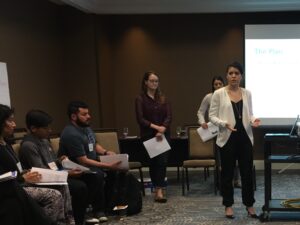
Social Justice Lawyering Clinic Students Tessa Carson (’17), Emily Diaz (’18), and Ashley Rotchford (’18) created the Welcoming Schools Toolkit. Emily Diaz states, “its purpose is to provide students, parents, and educators with the tools to advocate for schools that are committed to ensuring that all students—regardless of their immigration status—are welcome, safe, and protected in the school environment.” The toolkit offers sample resolutions and policies that represent proactive steps that schools can take to keep children safe from immigration enforcement raids, protect students’ privacy, and affirm a commitment to inclusiveness. Diaz, along with her partners, debuted the toolkit at PICC’s statewide convening in Harrisburg, Pennsylvania in May 2017.
 

Students create Welcoming Schools Toolkit for students, parents, and educators

The Youth Organizing Project at the Pennsylvania Citizenship and Immigration Coalition (PICC) came to the Sheller Center asking for help in creating a toolkit that would help immigrant communities advocate for the policies and practices needed to create safe and welcoming schools. After the fall election, PICC was flooded with questions from parents and teachers across PA, asking whether it was safe to send their children to school and what schools could do to protect students.

Social Justice Lawyering Clinic Students Tessa Carson (’17), Emily Diaz (’18), and Ashley Rotchford (’18) created the Welcoming Schools Toolkit. Emily Diaz states, “its purpose is to provide students, parents, and educators with the tools to advocate for schools that are committed to ensuring that all students—regardless of their immigration status—are welcome, safe, and protected in the school environment.” The toolkit offers sample resolutions and policies that represent proactive steps that schools can take to keep children safe from immigration enforcement raids, protect students’ privacy, and affirm a commitment to inclusiveness. Diaz, along with her partners, debuted the toolkit at PICC’s statewide convening in Harrisburg, Pennsylvania in May 2017.
 

Our unfair system of cash bail

The time has come to end the use of cash bail in Pennsylvania, says The Cost of Buying Freedom: Strategies for Cash Bail Reform and Eliminating Systemic Injustice, a new report from the Sheller Center’s Justice Lab and Redeemed PA, a community organization.

According to the report, the cash bail system discriminates on the basis of poverty, not dangerousness (as one interviewee noted, “Poor folks stay in jail and rich folks don’t”). And the result, for people who cannot afford even low bail, is not just loss of liberty; pretrial detention also makes it harder for them to assist in their defense, thus unfairly increasing the likelihood of conviction.

According to the report, the cost of keeping people in jail who don’t need to be there runs into the millions of dollars each year. Cash bail doesn’t accomplish its goal, since the likelihood that a defendant will return to court is not enhanced by the setting of a high bail figure. The system is also unnecessary: under state law, the most dangerous defendants can be detained without bail in any event. (And there’s other strange stuff; did you know, for example, that you’ll forfeit a percentage of your bail even if you’re found not guilty?)

Effective alternatives, including validated risk assessment tools and innovative supervision programs, are now in use in cities and counties around the country.  Pennsylvania should follow the lead of those jurisdictions, say the report’s authors — students Adorah Nworah, Paige Joki, and John Farrell.

Discussions about cash bail are already underway in Philadelphia, which — as part of its criminal justice reform plan — has undertaken to “establish a robust range of alternatives to cash bail based on risk level.” And both candidates for District Attorney have been addressing the subject; Beth Grossman (R) reportedly supports the continued use of cash bail, while Larry Krasner (D) states that he will implement alternatives for those charged with nonviolent offenses. Hopefully, the findings of the report will contribute to these discussions — in Philadelphia and statewide.

A national award


For their successful effort to end Philadelphia’s practice of billing parents for cost of their child’s incarceration, Prof. Colleen Shanahan and her students have received the 2017 Clinical Legal Education Association Award for Excellence in a Public Interest Case or Project. The “Double Punishment” project, conducted by Justice Lab on behalf of the Youth Sentencing & Reentry Project, was chosen through a competitive process involving clinical work from across the country.

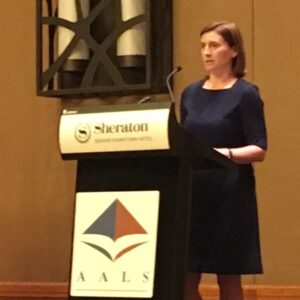
Prof. Shanahan accepted the award at the national meeting of the Clinical Section of the Association of American Law Schools in Denver this week. Hundreds of clinicians were present at the ceremony, which recognized Justice Lab and the Sheller Center. Congratulations to Prof. Shanahan, her students, and everyone who worked on this effort!

Sheller Center’s Temp Worker Project debuts at 29th annual Worker’s Memorial Day

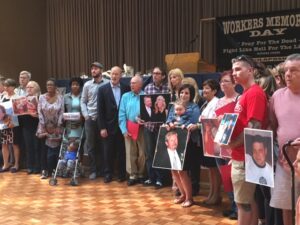
At the 29th annual Worker’s Memorial Day, the Sheller Center’s Temp Workers Project made its debut in front of an audience of hundreds of people, including Governor Wolf. Temp workers in Pennsylvania are increasingly found in blue collar industries and low-wage work. They are especially vulnerable to health and safety risks and pay violations on the job. A report by Rebecca Daily (2L), Tracie Johnson, and Holly Smith (2L), students in the Social Justice Lawyering Clinic, will be forthcoming this summer.

Sheller Center students help craft City resolution recognizing undocumented workers

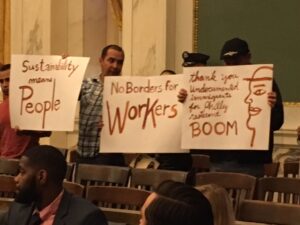
Last week, Philadelphia City Council passed a resolution that recognizes all workers, regardless of immigration status. Sponsored by Councilwoman Helen Gym, the resolution continues the City’s tradition of welcoming immigrants, acknowledging the contributions of undocumented workers to Philadelphia’s local economy despite their exclusion from the lawful workforce under federal immigration laws. It also notes the increased risk of abuse and discrimination against undocumented workers. The resolution cites the Universal Declaration of Human Rights, which establishes the fundamental human right to earn a living without unjust exclusion and fair and safe workplace conditions.

The resolution is a major victory for the local organizing efforts of Popular Alliance for Undocumented Workers’ Rights (PAUWR). Just a couple of years ago, PAUWR was hatched as an idea from the kitchen of Ben Miller and Cristina Martinez, to fight for the rights of undocumented workers. PAUWR grew in strength and numbers by hosting a number of sold-out community dinners throughout Philadelphia. It will continue to do so by partnering with immigrant chefs and taking its local dinner series nationwide.

The resolution was drafted with help from Rebecca Daily (2L) and Ashley Rotchford (2L), law students at the Sheller Center for Social Justice, who worked with PAUWR as members of Temple Law School’s National Lawyers Guild (NLG). “This resolution is yet another example of how local jurisdictions can be inclusive of immigrants, despite the current federal climate that is hostile to both immigrants’ and workers’ rights,” says Rotchford.

For a news article on the resolution, click here.

Ripple effects from “advocacy in action”

We’ve shared lots of information about the Justice Lab effort that, in collaboration with many partners, led the City to decide to stop charging parents for the costs of their child’s incarceration. But Monday’s panel discussion about this example of “advocacy in action” brought out an additional point: social justice efforts can have a ripple effect.

L to R: Prof. Colleen Shanahan, Councilman Kenyatta Johnson, DHS Commissioner Cynthia Figueroa, parent Kameelah Davis-Spears, student Wesley Stevenson, YSRP Co-Director Lauren Fine, and students Kelsey Grimes and Sela Cowger. Photo by Abraham Gutman.

Thus, the fact that City Council, the Department of Human Services, the Youth Sentencing and Reentry Project, and Temple law students were able – despite their differing roles — to cooperate in achieving this policy change had implications beyond the issue of incarceration costs. In a sometimes fractious political environment, “it showed,” DHS Commissioner Cynthia Figueroa said, “that we can work together.”

Likewise, Philadelphia’s decision to stop charging parents may have implications for other counties, since the State is now considering revising statewide guidance on the issue.

And there’s more: the discussion is also no longer just about charging parents of incarcerated children. City Councilman Kenyatta Johnson stated he’s “in it for the long haul” of questioning the array of fines and fees that further impoverish people whose incomes are already too low.

It’s an encouraging set of ripples. And it was encouraging, too, to hear Councilman Johnson say that often in government, “the best common sense comes from the activists.”

Guest post: refugee and travel bans

Temple Law students Lilah Thompson and Kimya Forouzan share their reflections on the third event in the Sheller Center’s “Making Sense of the Legal Headlines” series.

Last week, Professors Jaya Ramji-Nogales and Peter Spiro, and Jonathan Grode, Esq. spoke about the Refugee and Travel Bans imposed by Executive Order on January 27, 2017 and March 6, 2017.

For attorney and Temple Law alum Jonathan Grode, the effects were felt personally by his clients, the Assali family, who were coming to the United States through a family-based category. Although their process began in 2003, they were unable to travel to the United States until January of this year. Subsequently, they got caught up in the travel ban, and Mr. Grode was called to help.

President Trump has stated on numerous instances that his goal is a “Muslim ban.” However, the Assalis, a Christian family, were still excluded from entering the United States because they came from one of the countries on the travel ban list. Mr. Grode was eventually able to get the Assalis back into the United States after much legal and political footwork, as well as appeals to the media. However, the process was difficult and uncertain. Mr. Grode, who witnessed the ultimate family reunification at JFK Airport, stated that the moment was “like watching your child be born.”

In an effort to justify his refugee and travel bans, President Trump has persistently mischaracterized refugees. He has called refugees “illegal immigrants,” and has stated that until the government can institute an “extreme vetting” process, no refugees should be allowed into the U.S. This begs many questions: Who are refugees? Where do they come from? Why do they flee? How are they screened and vetted?

Who qualifies as a refugee?

In order to be deemed a refugee, an individual must prove that they have have a well-founded fear of persecution based on race, religion, nationality, political opinion or membership in a particular social group. Over 21 million people are refugees, 51% of whom are children. The number of refugees in the world is currently at the highest level ever recorded in human history.

Why do refugees flee?

Currently, 53% of refugees worldwide come from Syria, Afghanistan and Somalia. An estimated 11 million Syrians have fled their homes since the outbreak of the violent civil war in 2011. While situations in countries facing mass displacement and flight are different, they share important commonalities, including violence, instability, and persecution. Although President Trump has lumped refugees in with “radical Islamic terrorists,” refugees are in fact often fleeing the same terror that the U.S. is claiming to be fighting. Refugees are not simply crossing borders looking for a new life; they are forced out of their homes because it is too dangerous to survive there.

How are refugees screened, vetted, and processed to come to the United States?

As Prof. Ramji-Nogales stated, “we are already conducting extreme vetting.” In fact, Prof. Ramji-Nogales pointed out, refugees receive “the most extensive set of checks of anyone entering the United States.” Under the U.S. Refugee Admissions Program (USRAP), an interagency process that includes three primary U.S. Government agencies—Department of State, Department of Homeland Security (DHS), and the Department of Health and Human Services (HHS)—refugees are vetted based on specific requirements. This includes an in-person interview with DHS, security checks, and a medical exam. Due to these strict requirements, the screening process alone takes anywhere from 18 to 24 months. In other words, refugees are lawfully entering the United States. Once they are approved and processed to come to the U.S., refugees start on a path to citizenship.

How much does the United States do to help refugees?

Prof. Ramji-Nogales described the number of refugees the U.S. takes as a “drop in the bucket.” The ceiling for refugee admission in the U.S. is set each year; in 2015, it was 70,000. In 2017, President Trump halted even this small contribution to resettling the world’s most vulnerable people.

How does the Muslim Ban fit into the larger global issue of refugee resettlement?

Professor Spiro detailed the timeline of the recent Muslim Ban and its effects on the global issue of refugee resettlement. He detailed the specifics of the first ban, implemented on January 27, 2017, which suspended U.S. entry for those from Iran, Iraq, Yemen, Syria, Libya, and Sudan. The order went into effect immediately, and created chaos in airports throughout the United States. Additionally, the ban affected not just refugees, but also visa and green card holders, many of whom had been residing in the United States for extended periods of time but had simply traveled outside of the country when the bans went into effect. On February 3rd, a nationwide temporary restraining order was issued, and Customs & Border Protection resumed “standard policy.”

On March 6th, a second ban was ordered. The new order affected individuals from the same countries as before, although Iraq was excluded and it no longer included existing visa holders. District courts in Hawaii and Maryland shortly thereafter issued nationwide preliminary injunctions blocking the second ban.

Why is this all important?

There is a misperception that refugees are somehow dangerous terrorists. The idea that the U.S. can skirt its international obligations under the 1951 Refugee Convention to take in refugees because we equate refugees with terrorists is illogical, immoral, and illegal.

When we turn our back on refugees, we tell the world that the U.S. cannot tell the difference between a refugee, who is fleeing terror, from a terrorist, who is the oppressor. Our action says that, even with all of the facts about what refugees face, and the fact that they are screened and vetted more than any other individual who sets foot on U.S. soil, we do not care to help. It says that U.S. citizens deserve peace of mind over a refugee child’s safety from violence or death.

However, this can change. We can take in more refugees. We can fulfill our obligations under international law. We can support non-profit organizations resettling refugees, like HIAS Pennsylvania and Nationalities Service Center here in Philadelphia.

If we can contribute anything to this situation, it is information and understanding. In the face of fear politics, we must come together as a community to better understand the refugee process so we can better act towards changing the narrative.

For more information about immigration and refugee law, please check out this Resource Guide, created by Carla Wale from the Law Library.